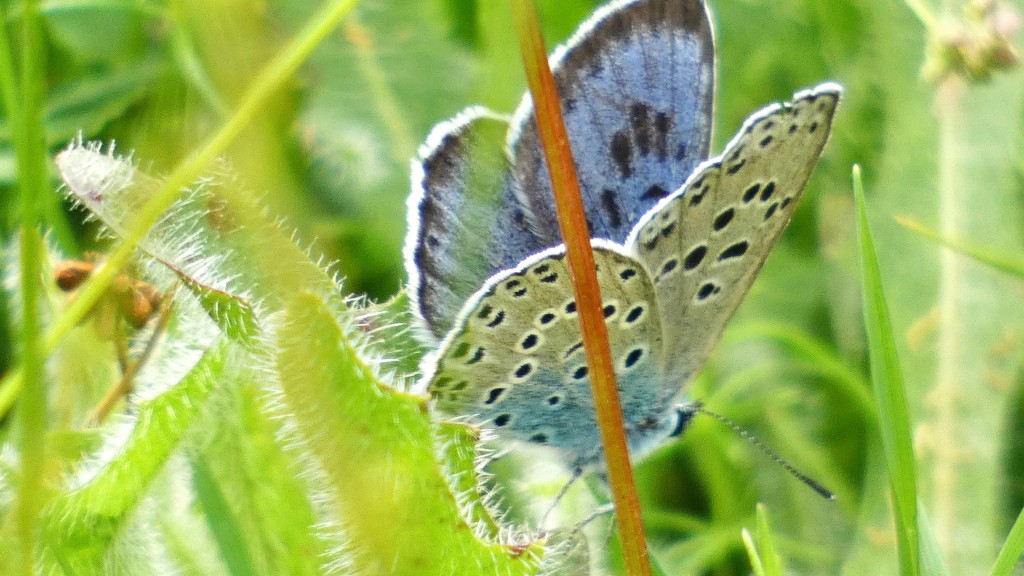
Watching the re-appearance of the Large Blue butterflies on Collard Hill again this summer has been really enjoyable. These are fabulous butterflies that I hope more and more of us in the UK will be able to see in future. For now the Collard Hill population of Large Blues is still one of just a handful in the country, part of conservation efforts to try to bring them back to a much better number in future.
The gorgeous dark blue patterned wings of the Large Blues started to be seen again by us on the 12th of June this year, which was a full 2 weeks later in the year than they emerged last year. We think this had a lot to do with May’s challenging cold and wet. There were certainly a lot of what felt like heavy “April Showers” still falling regularly up until the last week of May. The sun just started to emerge in those last few days of May. It seems to be true to say the emergence of many other insects was delayed by 2- 3 weeks in fact.
That rain falling coincided with the grazing cattle being ushered off the main hill, and this meant the grasses and wildflowers have had a lot of rain and sun which has led to a significant surge in growth. In places the wild meadow is up above waist height, providing a variety of structures and habitats not only for insects but also for small mammals, something we’ve seen local kestrels taking full advantage of!
Fortunately the all-important Wild Thyme flowers on the slopes have stayed accessible to the egg-laying female Large Blues, though they are having to work a little harder to get to the plants!
Photographing them amongst that grassy sward is definitely more challenging this year, compared to last. So, I want to wish good luck to everyone who comes to Collard Hill to try!
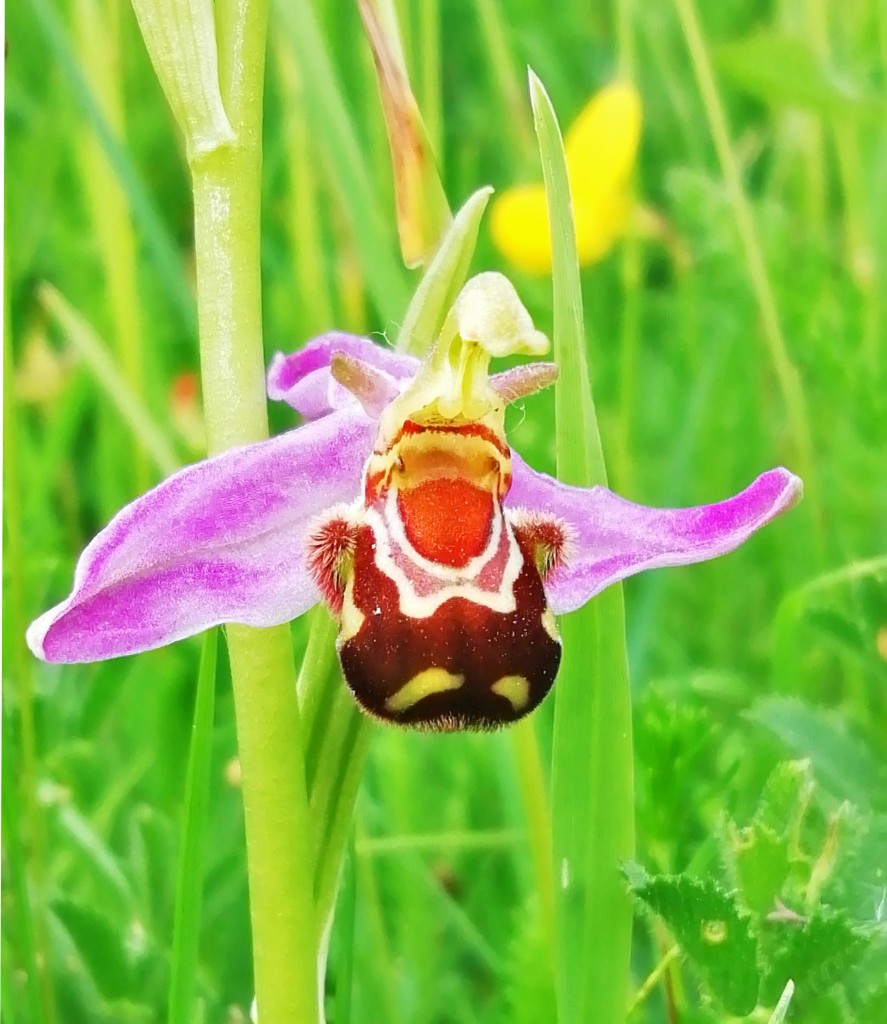
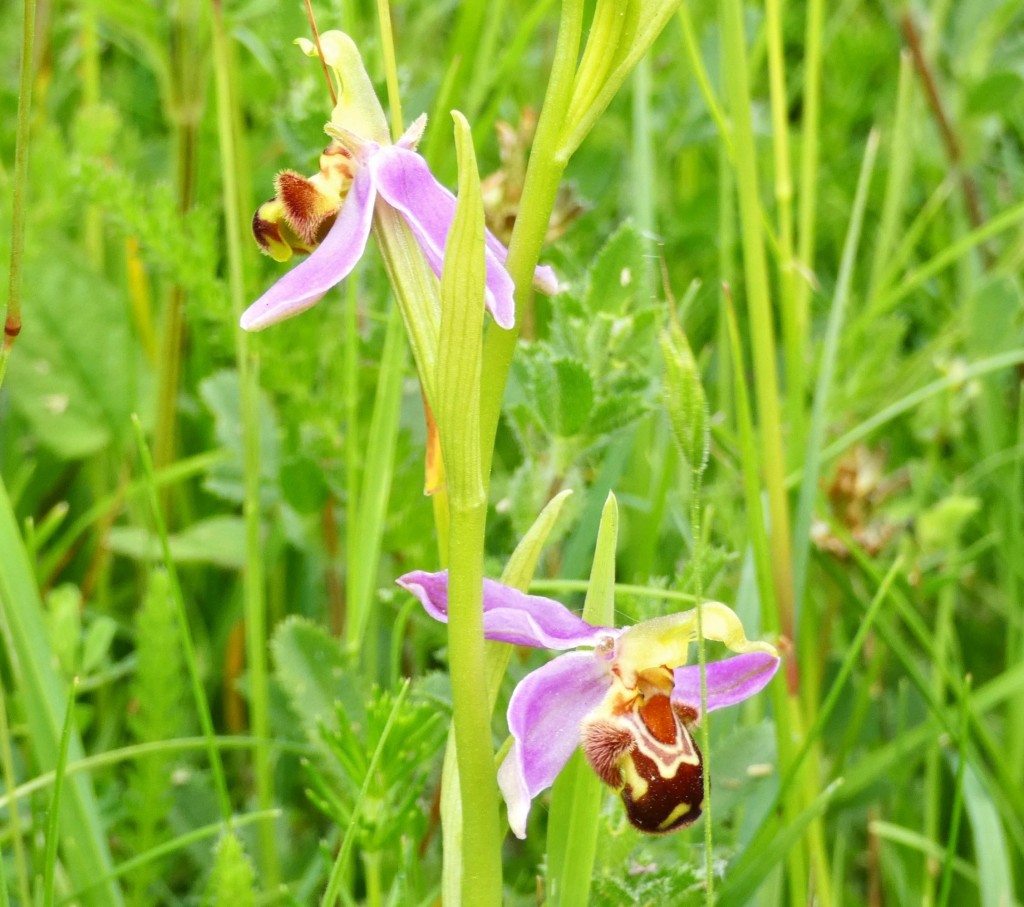
Amongst the gorgeous meadow in certain places we are seeing lots of these fabulous bee orchids. What clever mimicry! Irresistible to the male pollinating bees!
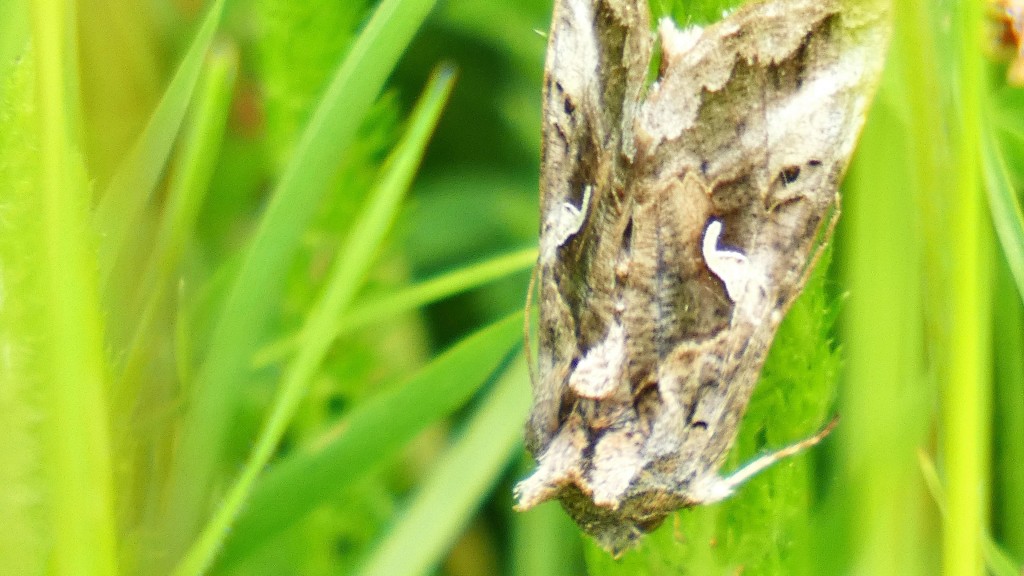
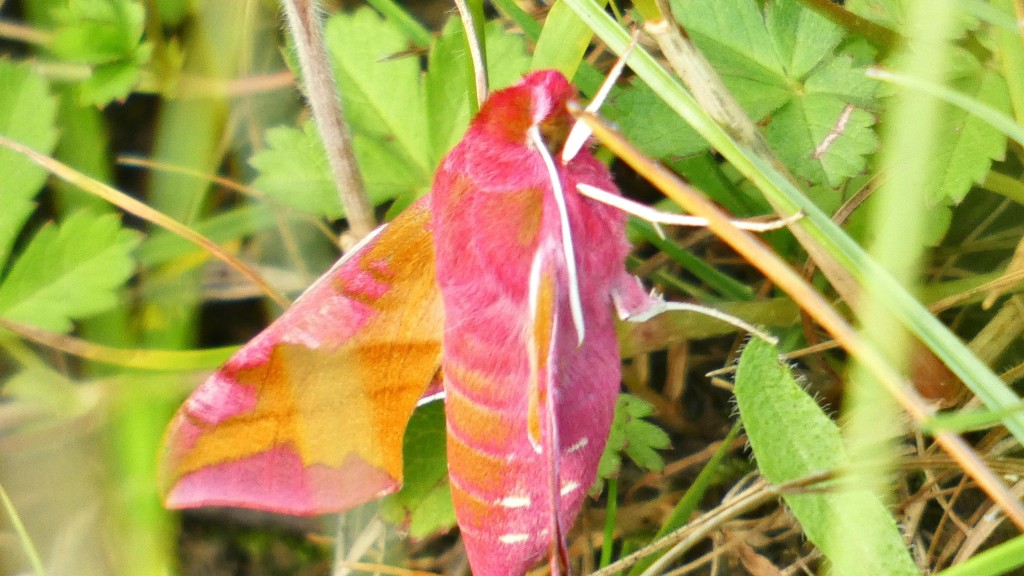
Also, walking through on our butterfly transect survey we’re seeing increased numbers of day-flying moths, including 6-spot Burnett, Silver-y and best of all, a gorgeous, pink Small Elephant Hawk moth.
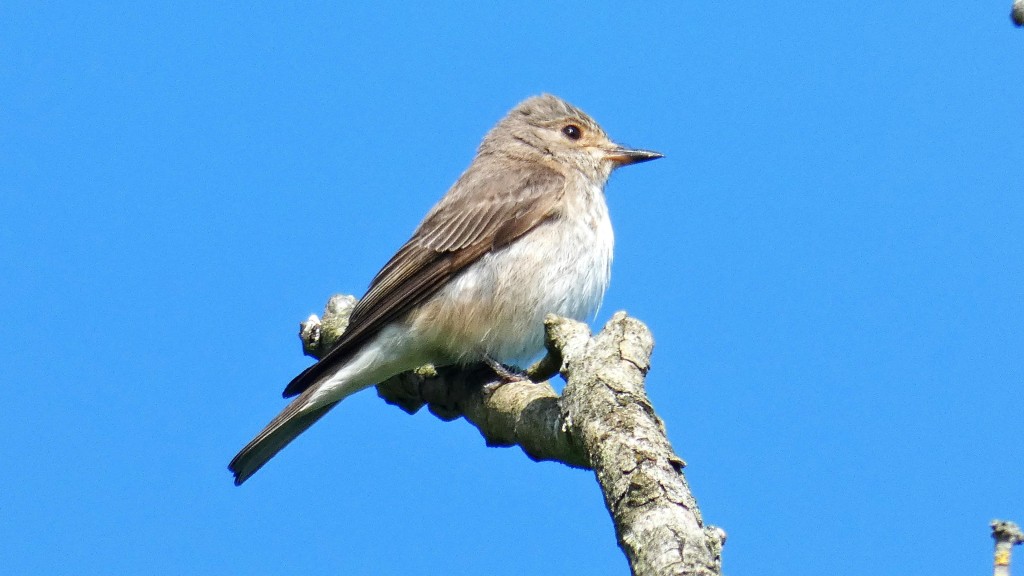
Invertebrates beware, this very smart Spotted flycatcher has a favourite perch in the middle of the hill, wooded area.
Birdlife as ever is very well settled on Collard Hill. We’re hearing Great Spotted Woodpeckers, Song Thrush, Bullfinch, nesting Common buzzards and a small parcel of Linnets regularly chattering away too.
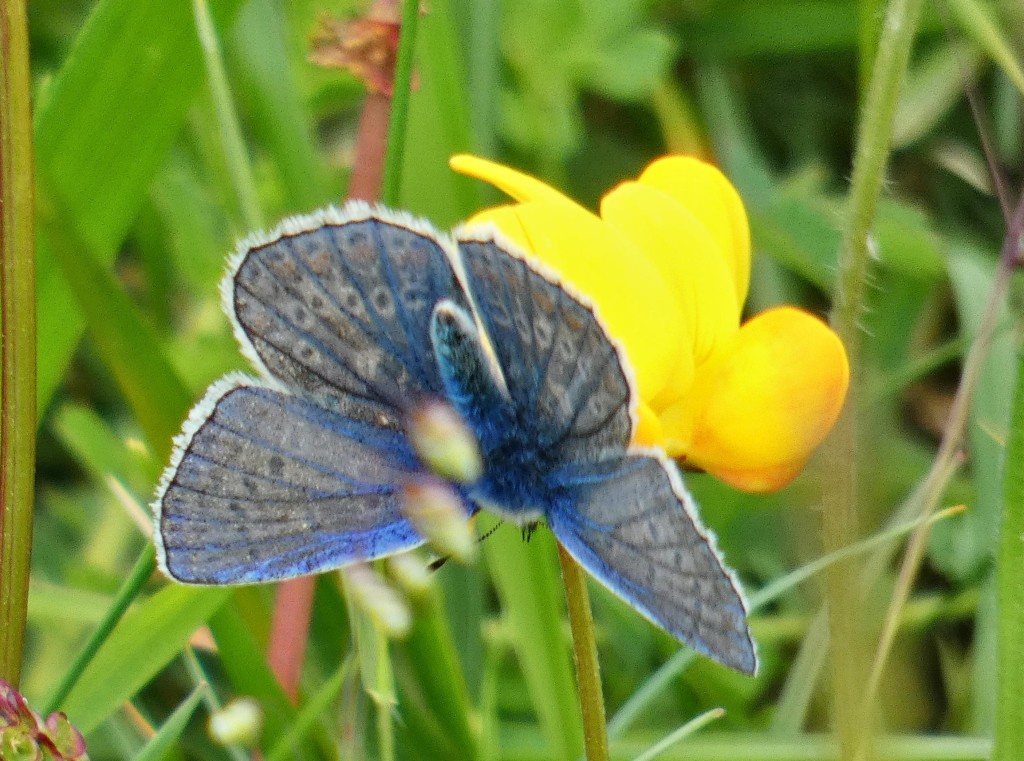
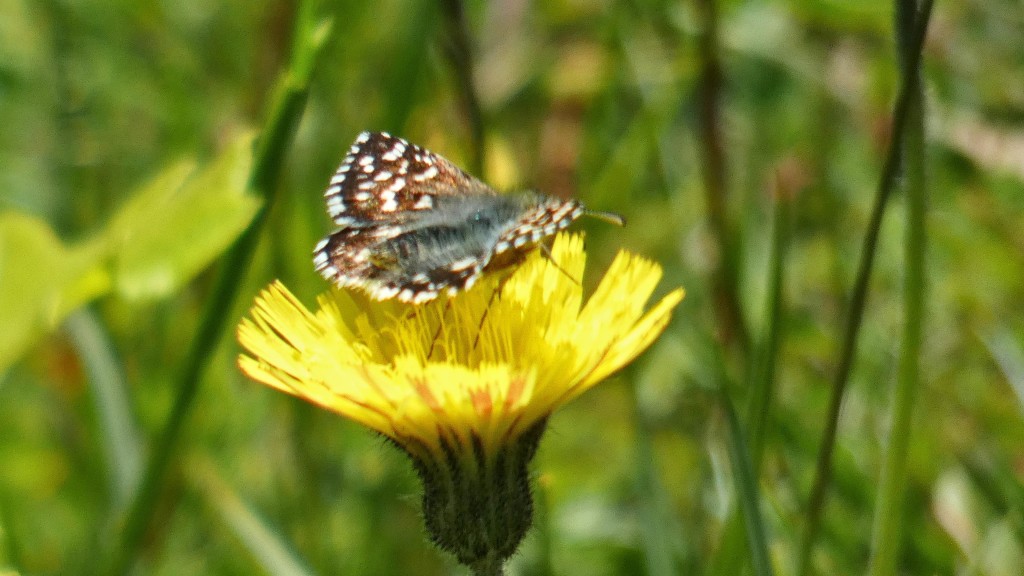
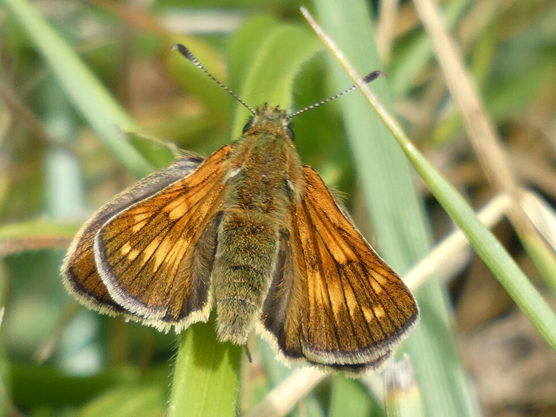
Before the Large Blues emerged, we saw some familiar butterfly “early-emergers” in the form of Grizzled skippers and Common blues feeding on the late spring Common Bird’s-foot-trefoil and Mouse-ear Hawkweed
We’re really appreciating everything that our local National Trust nature reserve brings us. From stunning views, to rewarding, heart thumping Hill walks to this never ending string of exciting encounters with beautiful wild plants and animals…oh and who could forget some very nice conversations with other like-minded nature lovers too. Thanks everyone! Glad to be a National Trust Member and Volunteer for another year.
Over the last 5 weeks we’ve watched a lot change on Collard Hill. The Large Blues began emerging on 29 May. We’ve watched the types of vegetation shifting as days became longer and the weather moved through extreme dry to extreme wind and rain at times.
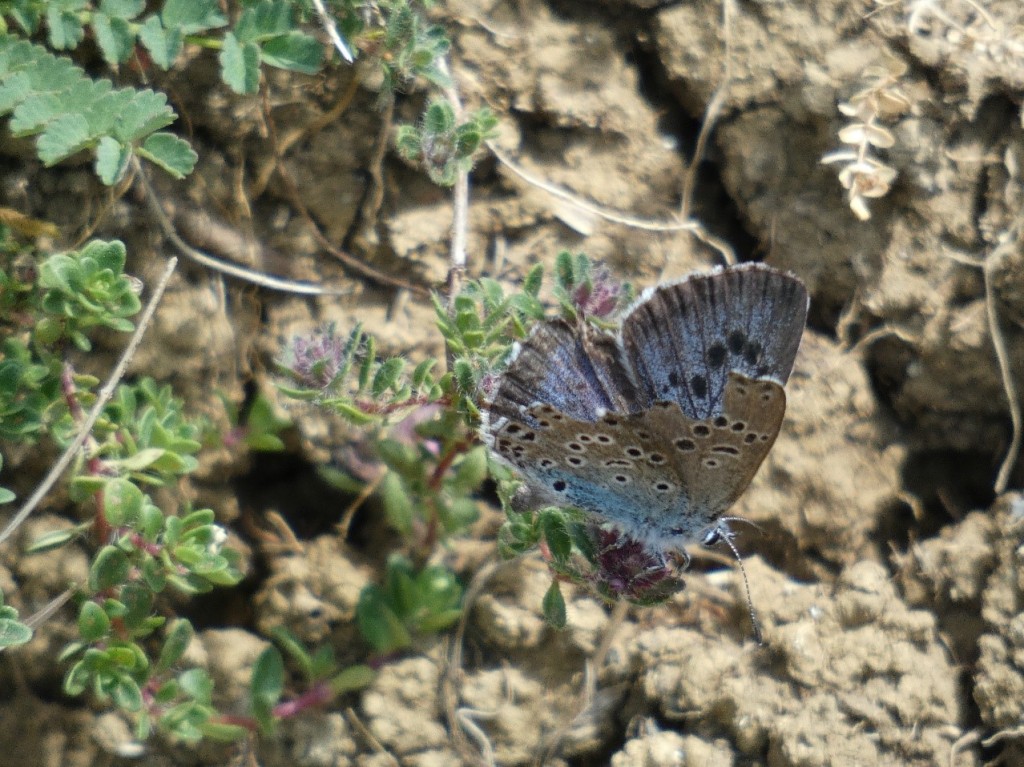
We noticed how the Large Blues would spend restless mornings some days, hardly ever settling on plants, constantly on the wing, circling around their preferred areas of the hill. I have managed to take photos of the very few Large Blues that have eventually settled to feed or to lay an egg but in general, the past week has been deliciously frustrating because our favourite little creatures have been so hard to keep up with! Often, we’ve just confirmed our identifications with binoculars and moved on, knowing that they wouldn’t be settling for us to get a better look at them. That has meant I’ve been able to train my camera on some other amazing plants and animals too this week which I’ll come to a little later in the blog.
There certainly haven’t been so many Large Blues to see in recent days. Our counts have been lower since mid-June and fewer than 10 were spotted each day across the whole hill since the 13 June. The peak counts of 28 were both around the start of the second week of June.
Because the weather has often been colder and they have still been so active, we have often wondered how they managed to burn so much energy staying on the wing for so long while rarely stopping to feed on energy-rich nectar. The drive to find a mate, fertilise and lay eggs on good quality thyme buds must be overwhelming and looking at the appearance of some of the adult butterflies, many with those beautiful blue wing scales worn and faded, that effort is obviously a real individual sacrifice.
Above is a picture I took of a Large Blue butterfly laying an egg on Weds 24th June. This is 23 days after I first observed them egg-laying on Collard Hill this summer, so the breeding season has been of a good length. We’re hopeful that a good number of eggs will hatch Collard Hill’s 21st generation of Large Blues successfully in the next chapter of their recovery story. Susie and I are glad to have been able to help the Collard Hill team monitor the population while the site has been affected by lockdown restrictions. Watching their tireless efforts and occasional battles with the elements has been a positive experience for us too.
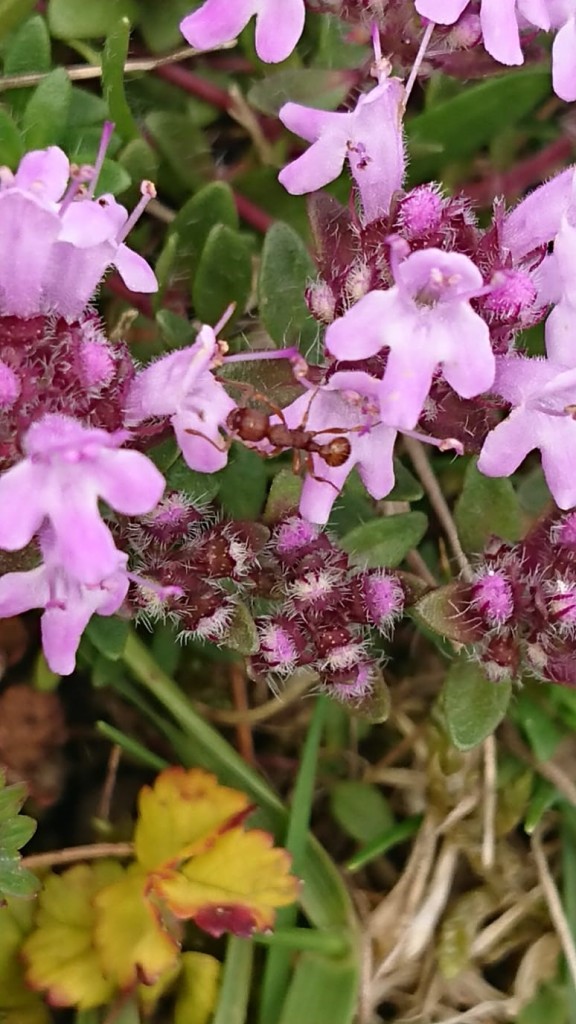
Late on Friday 26 June I went up to the hill in the evening light and saw something special. A red ant worker almost certainly Myrmica sabuleti was foraging amongst a patch of wild thyme flowers.
This is the type of activity that the Large Blue caterpillars will exploit and it’s likely that very soon, several caterpillars will be reaching the stage in their development where they deliberately drop from the thyme and begin to emit a hormone very much like the hormone the Myrmica ant’s own queen emits. Cleverly the caterpillar will convince the ant that it is one of its own colony’s grubs and that ant will pick it up and carry it down to the relative warmth and safety of the ant’s underground colony to tend to it as it would one of its own grubs. It is thought that it takes the entire annual production of a nest of about 350 workers to rear just one caterpillar so that ability of Collard Hill to support these Myrmica ants is vital and is the main reason that the grazing on the site needs to happen right up until mid-May, keeping the grass short and helping the ant nests warm up in direct rays of the sun to the optimal temperature for those ants to thrive. This is such an amazing co-dependence and a type of ecology that shows just how much each species in this community can rely entirely on the successes of the other species that they share the hill with.
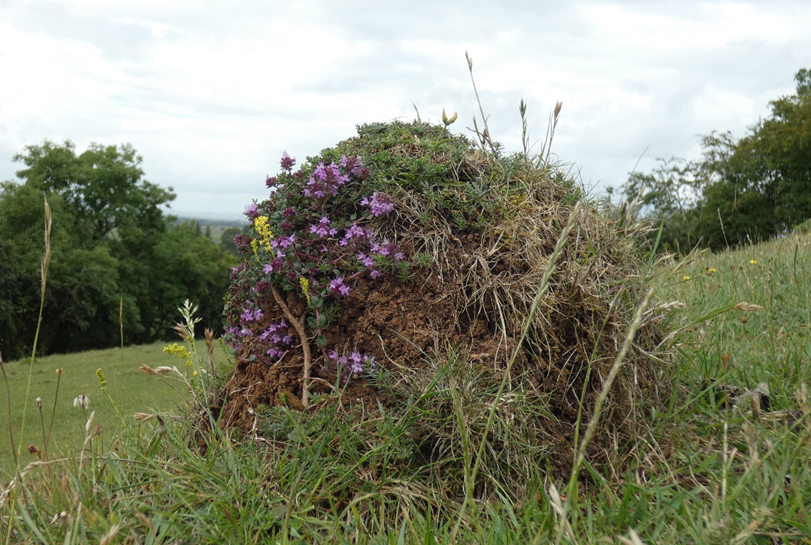
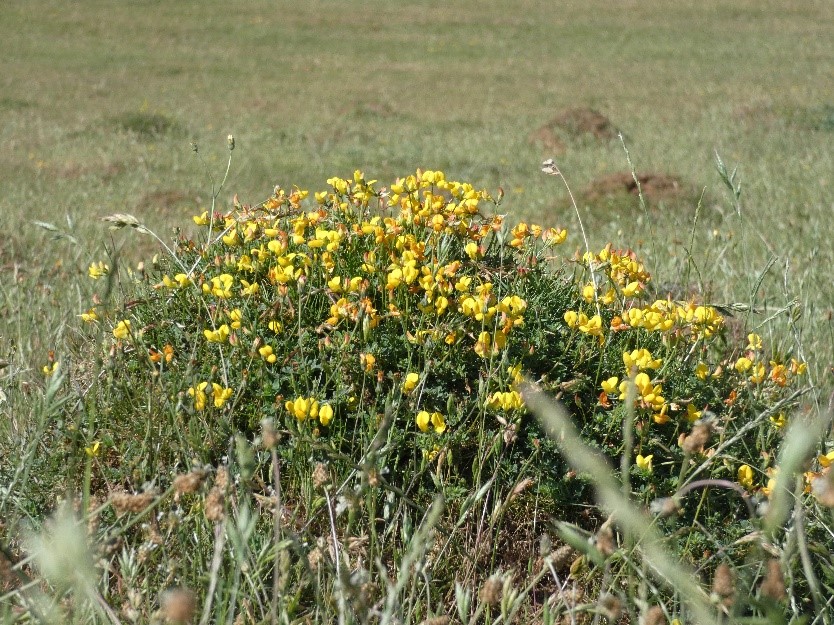
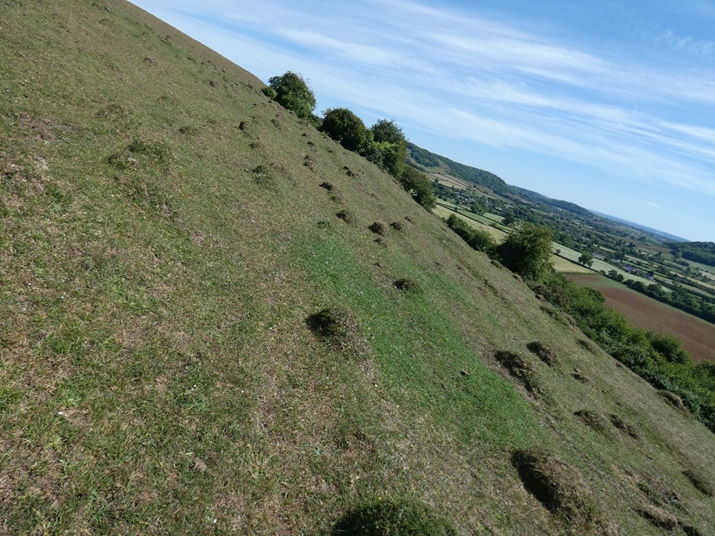
On that subject I’d like to showcase the rest of the wildlife we’ve seen across the hill in the past week. The rains in mid-June really brought about a change in vegetation and many anthills interestingly have mixtures of plants crowning them, from lady’s bedstraw, to common and spiny restharrow, to Bird’s-foot trefoil and of course, wild thyme.
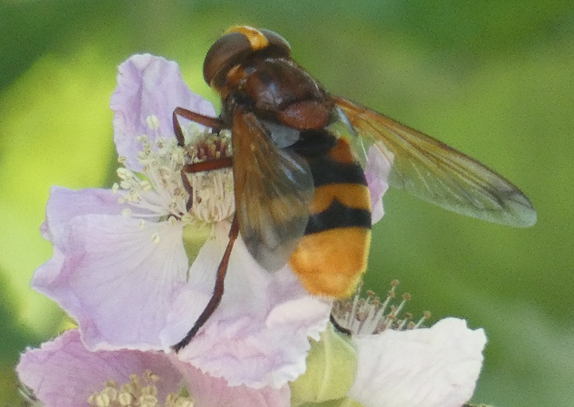
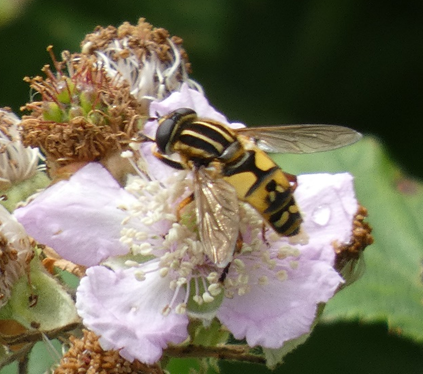
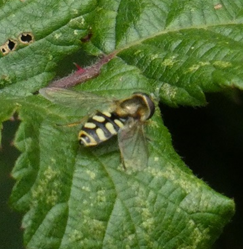
Patches of bramble and gorse on the lower slopes have flowered, and grasses have developed seed heads. The plants flourishing like this has had a knock-on effect and the diversity of invertebrates we’ve seen has really increased. We’ve seen a great many hoverflies (including Volucella sp, Helophilus pendulus and Scaeva pyrastri pictured) and a variety of honeybees and bumble bees (which I hope to detail more in further blogs) busily visiting flowers.
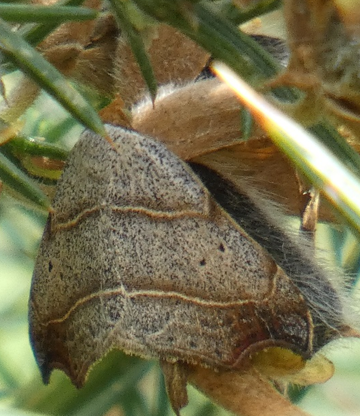
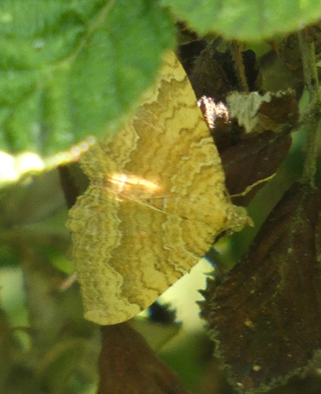
Many moths have been emerging and while scanning the scrub plants for Large Blues we spotted several Geometrid moth species like the Yellow Shell as well as this Beautiful Hooktip moth, which is a relatively scarce UK moth. What a great name!
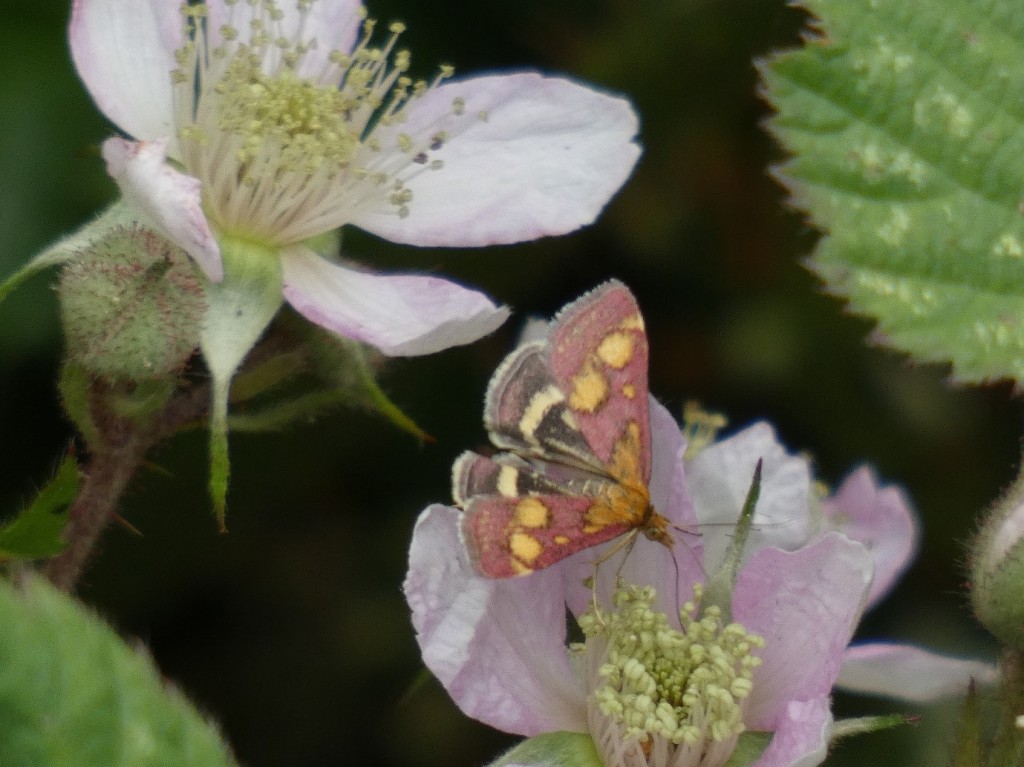
This Mint Moth was a really nice discovery too, also enjoying the many flushed bramble flowers out now.
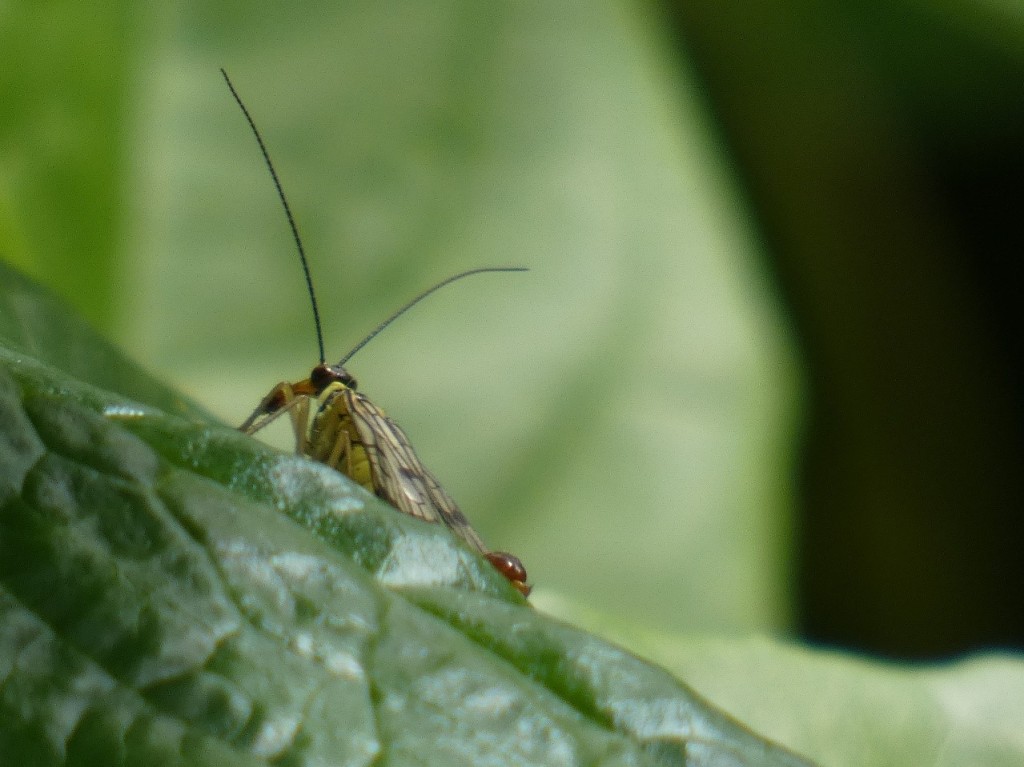
Another very interesting find for me was this Scorpion Fly, Panorpa Germanica
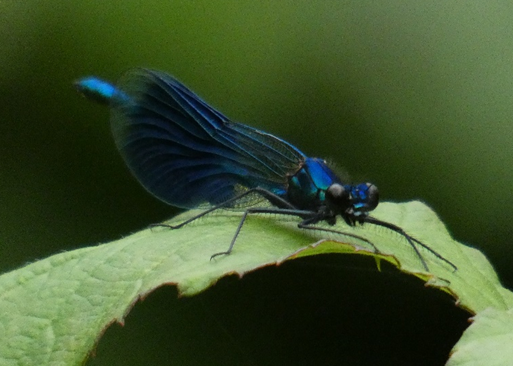
This male Scorpion fly’s large tail appendage is just visible in my photo here. Also found at the same time in the lower slope nettle patches was a very boldly coloured male Banded Demoiselle, Calopteryx splendens.
What a fine specimen and I think he knows it looking at his pose!
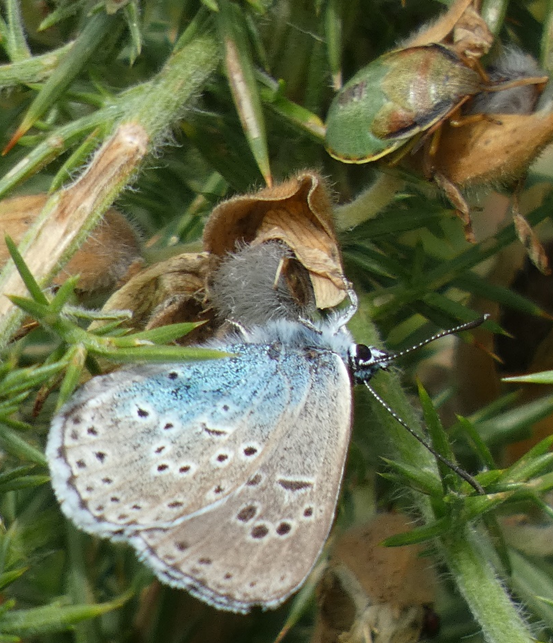
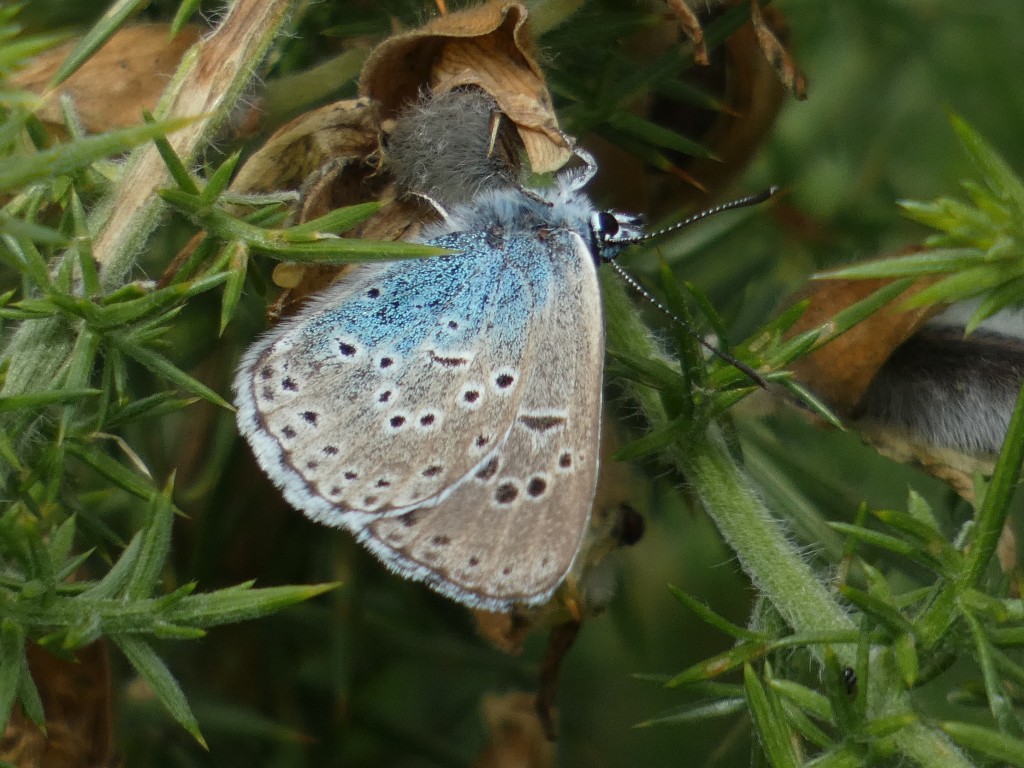
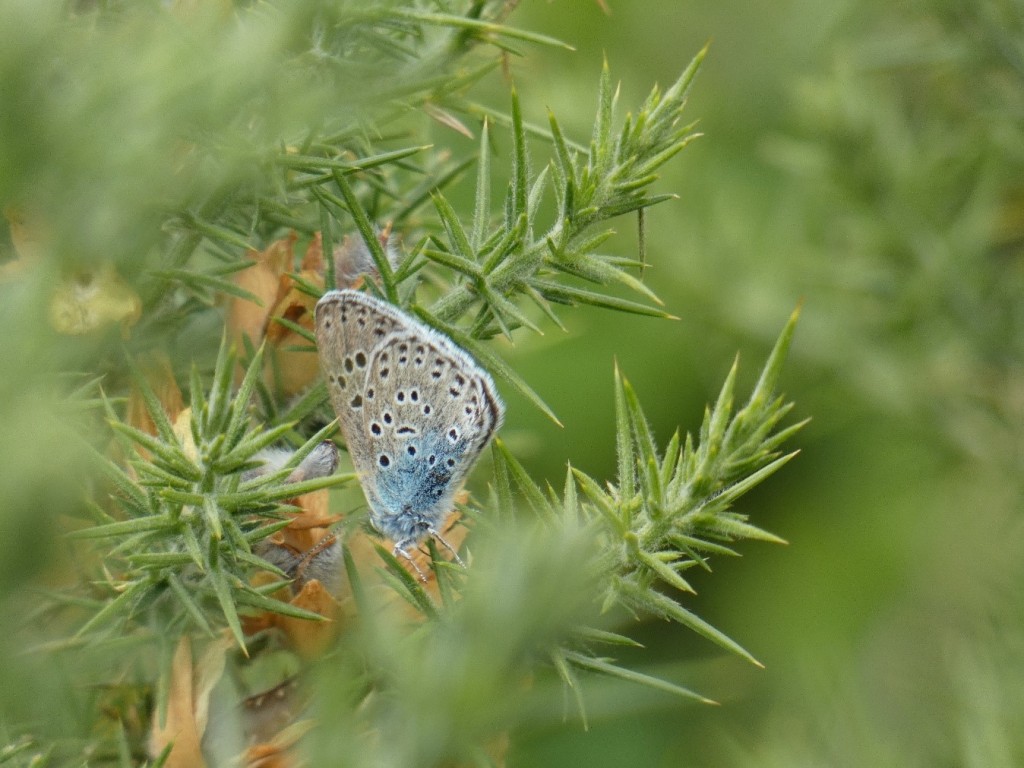
This Large Blue is sharing a gorse bush with what appears to be a late-instar nymph of the Gorse Shieldbug, (Piezodorus lituratus I believe, although I’m ready to be corrected here as I am new to identifying shield bug species!).
Interestingly, seeing our Large Blues alongside the armoured exoskeleton this young shield bug is busy growing, I was reminded of how the invertebrate world can be a tough and threatening place. Although the caterpillar stage of the Large Blue, with its cannibalistic and carnivorous habits can seem a bit gruesome to us, it’s worth remembering that the soft and vulnerable nature of many caterpillars often leaves them cast in the role of “juicy foodstuff of choice” for so many other animal species across the world. A recent study of a Mongolian Cuckoo in fact showed it had made an astonishing 26,000-mile journey to South Africa (one of the longest migrations of any known animal) across 16 countries fuelled almost entirely on caterpillars! Perhaps it’s only fair then that a few caterpillar species do take a stand and become “the eaters” as opposed to “the eaten”!
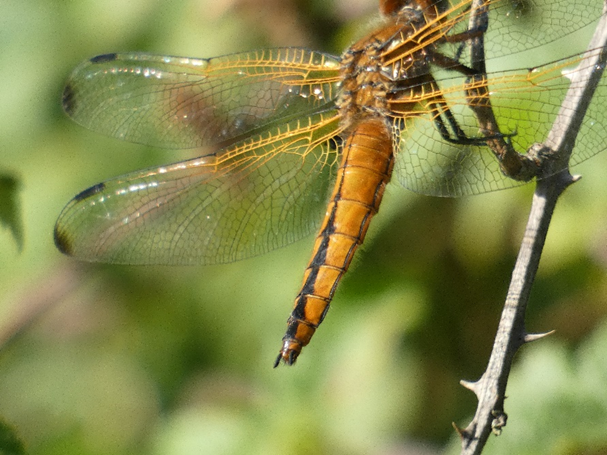
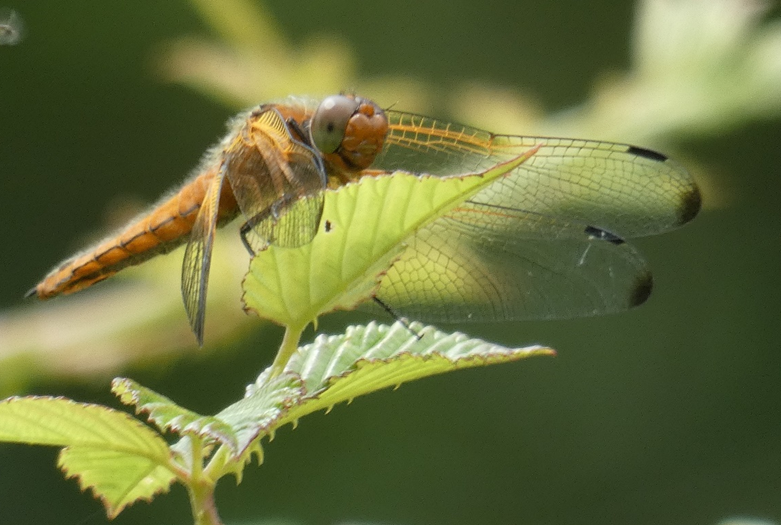
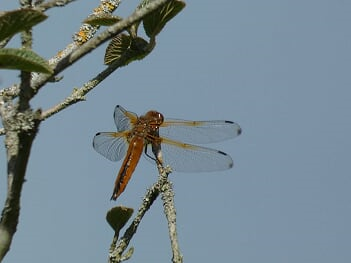
In last week’s blog we referred to a relatively rare Odonata (dragonfly) species, the Scarce Chaser and moved swiftly on in our blog to cover up the fact that I hadn’t managed to get a decent photo. This week though I was in luck and got these two pictures of what I believe to be an immature female.
Other nature reserves in Somerset such as at WWT’s Steart reserve have begun to report this Category 3 Red Data Book species too which is encouraging as it has been known in only 6 main localities in the UK in recent times …. Also… is she smiling at us? I’m not sure.
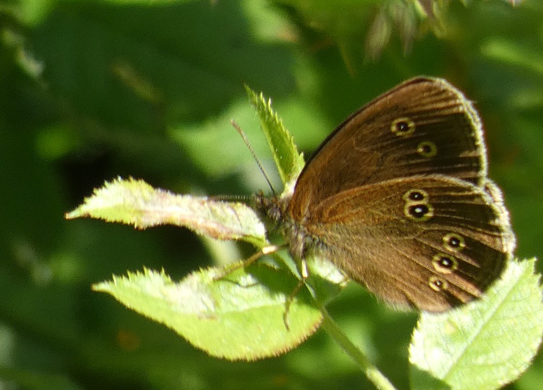
We’ve begun to see the first Ringlet butterflies emerge in the past few days too.
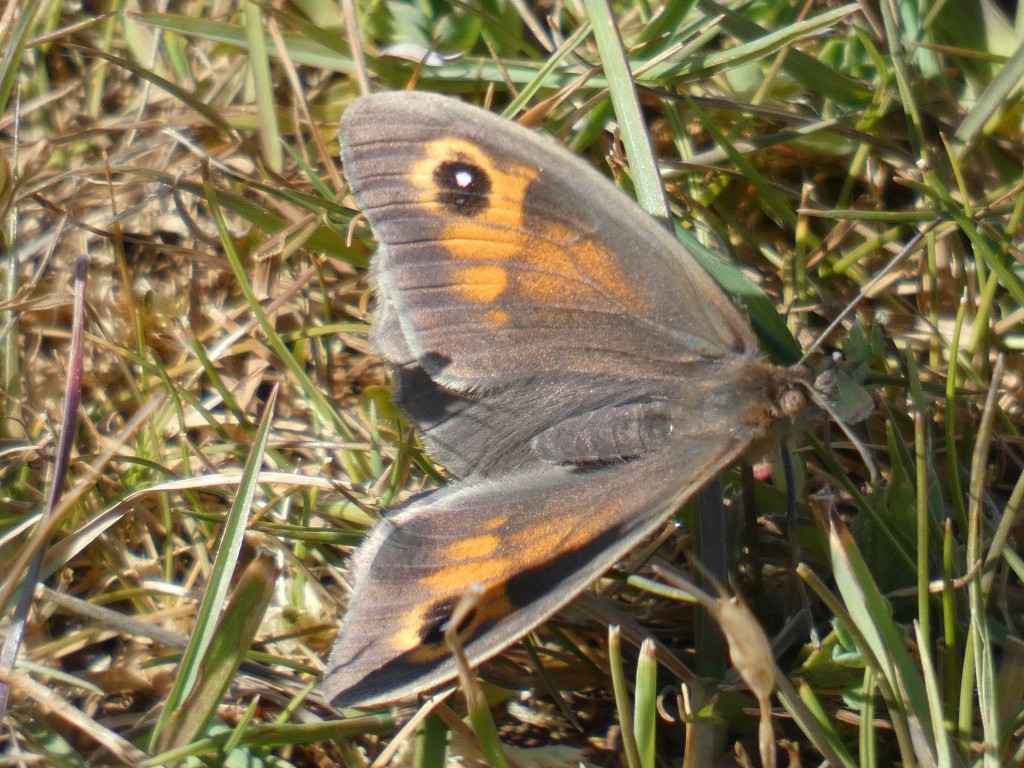
Although, appearing superficially similar to the much more common meadow brown (also pictured) when in flight, on closer inspection the Ringlet has a really gorgeous set of clear rings across its upper and lower wings.
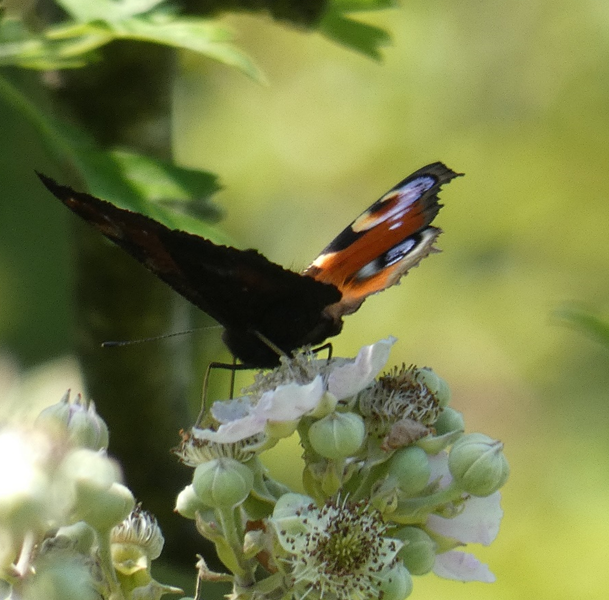
I’m glad we’ve been taking the time to look out for these guys emerging. At one point I didn’t think we were going to see them as every brown we observed was turning out to be a Meadow Brown for quite some time. Also seen after an absence of about 3 weeks was the Peacock butterfly who’s amazing wing patterns clearly deserve a feature in this week’s blog.
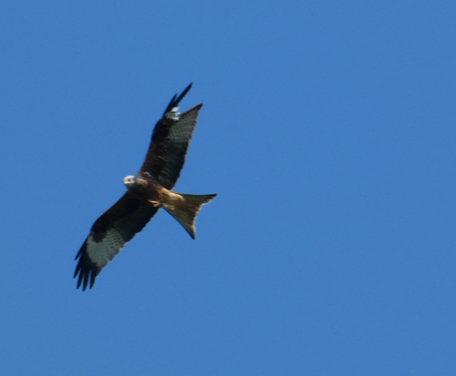
On a final note, the most notable bird experiences this week was watching a red kite entering Collard Hill’s airspace early one morning and swiftly being joined by a female sparrow hawk and a group of noisy herring gulls. Red kites have definitely not been regular visitors to the area until recently. My neighbours have quite reliably let me know that this year has been the first in many years that Red Kites have been seen over Compton Dundon and the local area. Red Kites, like the Large Blues have been making a comeback after concerted conservation efforts in the UK. This was a sight that made me really happy, and then to spot a Common buzzard high up above the Kite and the Sparrowhawk really topped it off. I’ve seen the Red Kite on two further occasions since and although it’s missing wing feathers help me to identify the same individual it obviously has had a tough time settling into the community.
I know I’m not the only one happy to see such beautiful scavenging birds getting established again around the reserve as they do play a vital role in cycling nutrients back into the ecosystem and of course adding to the visitor wow factor alongside the Large Blue.
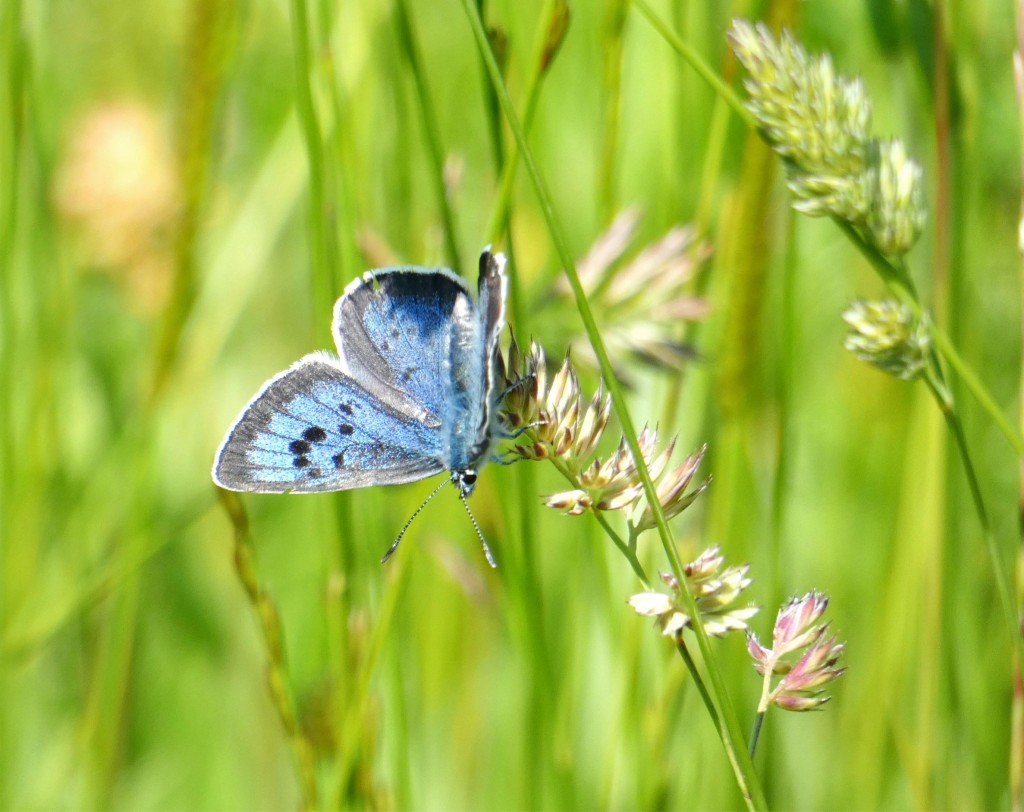
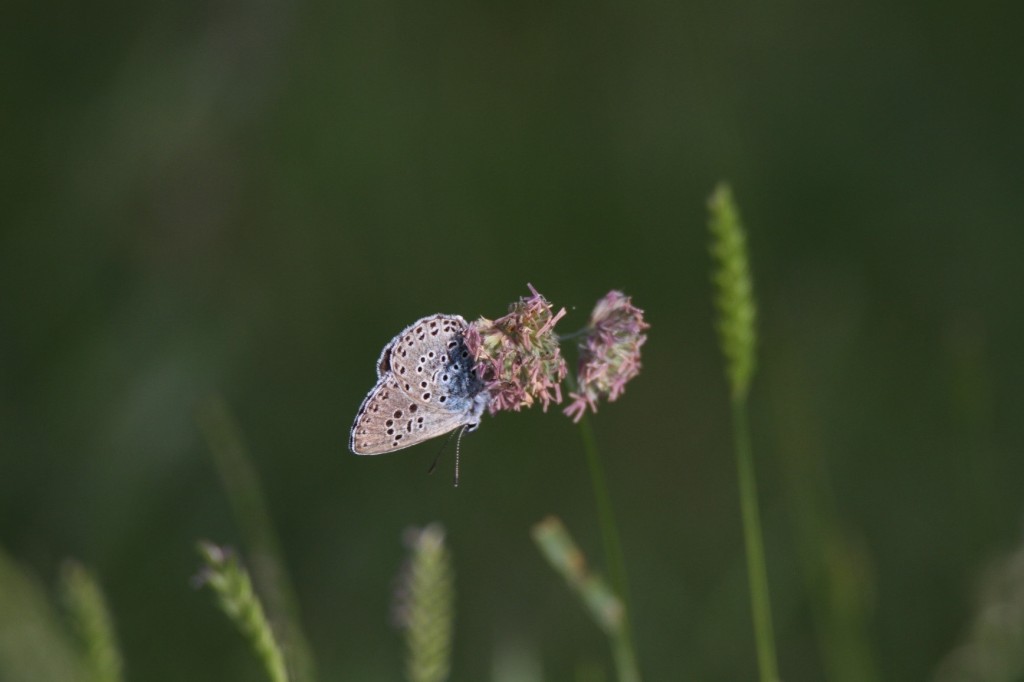
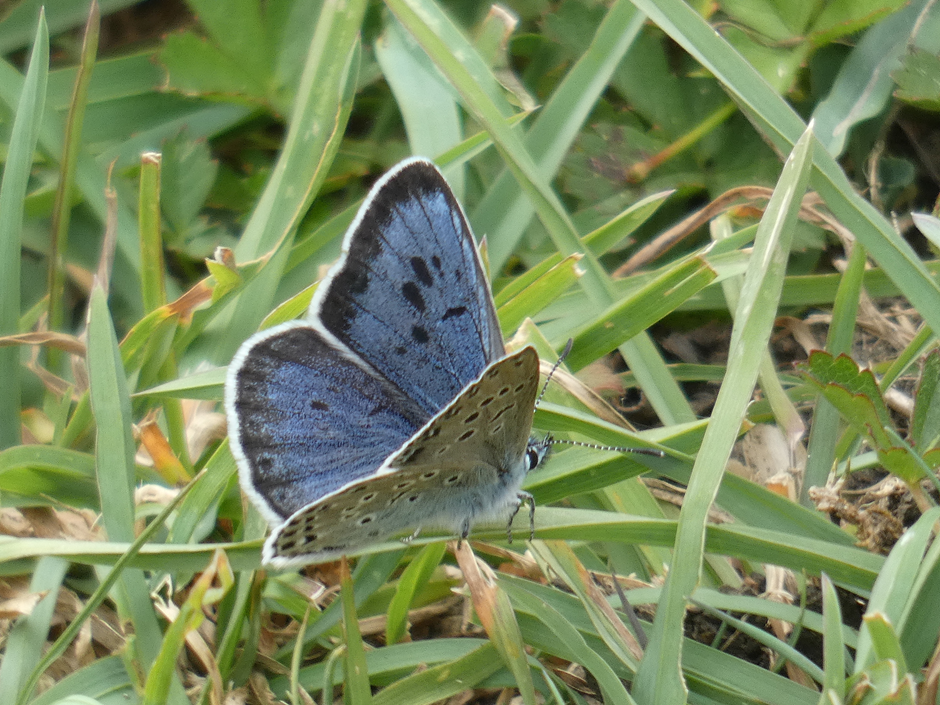
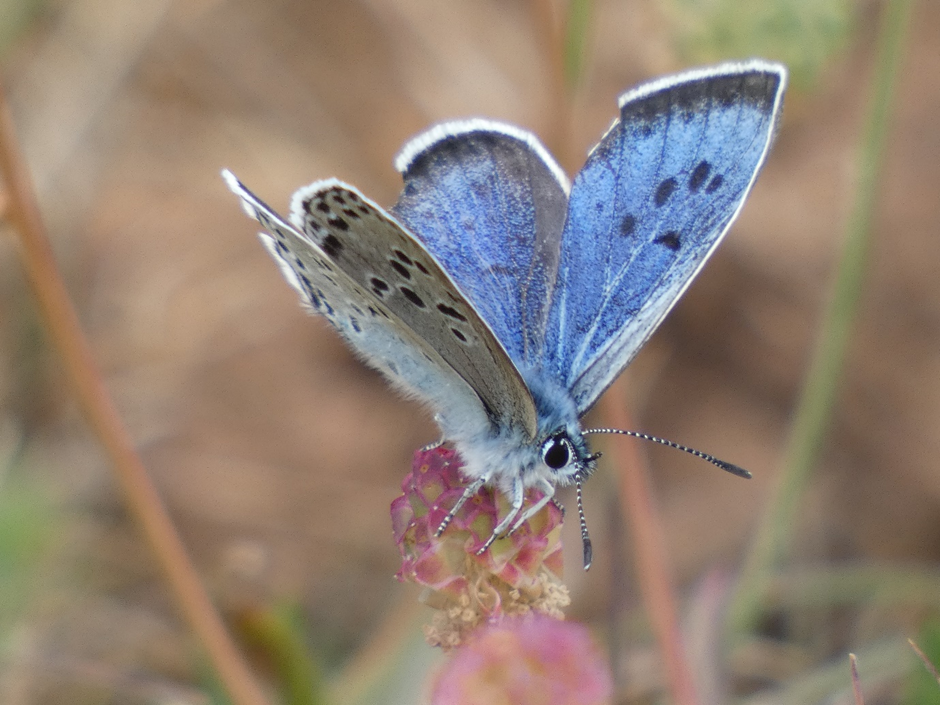
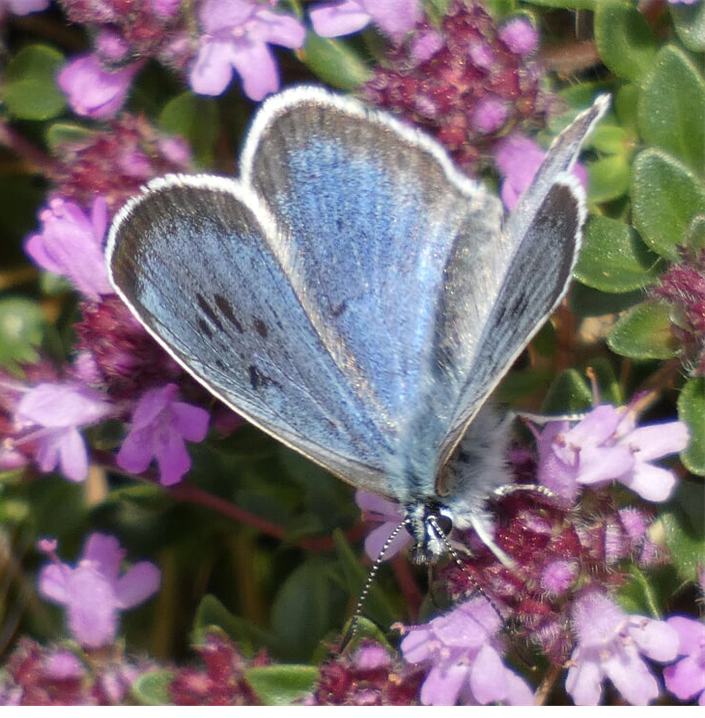
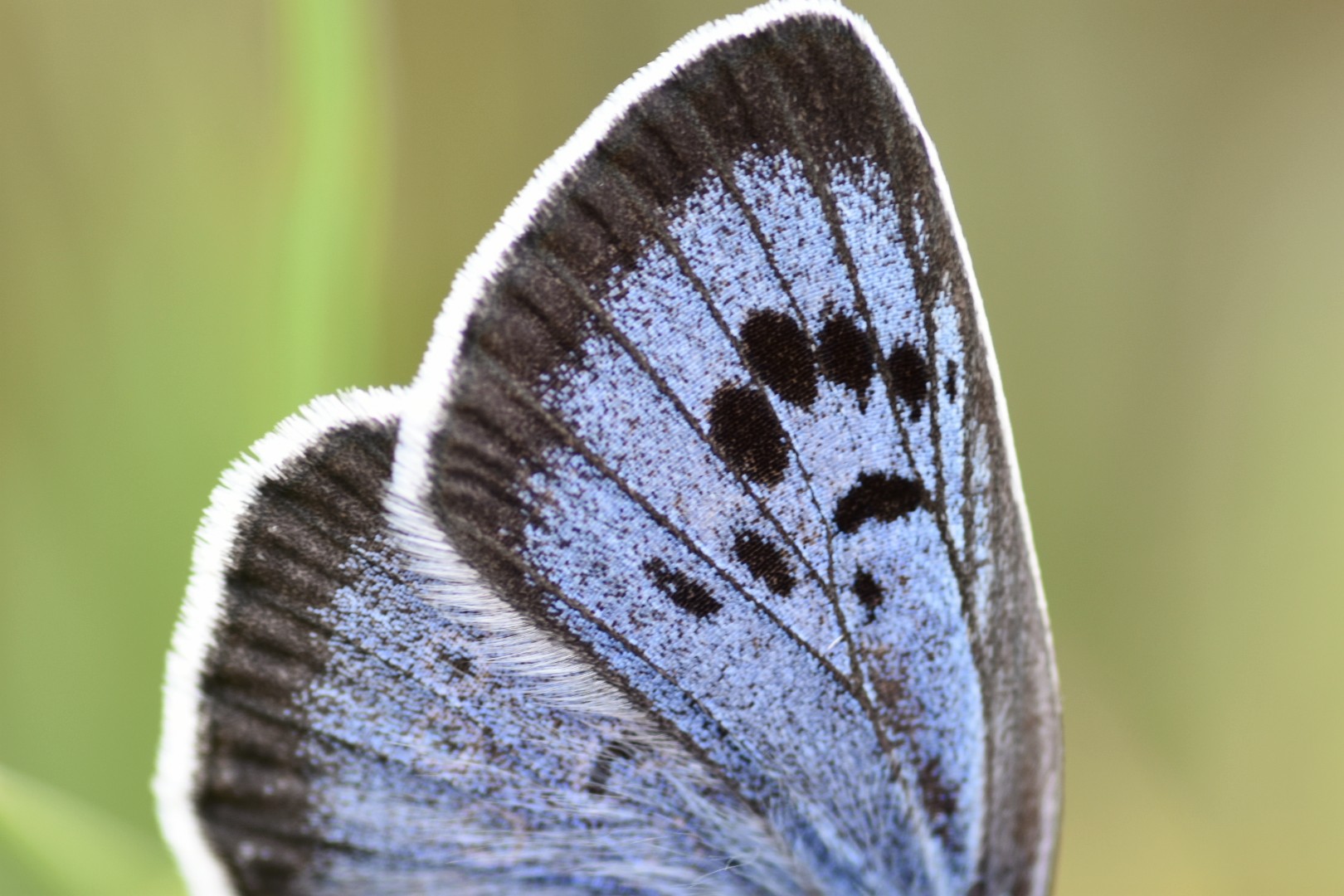
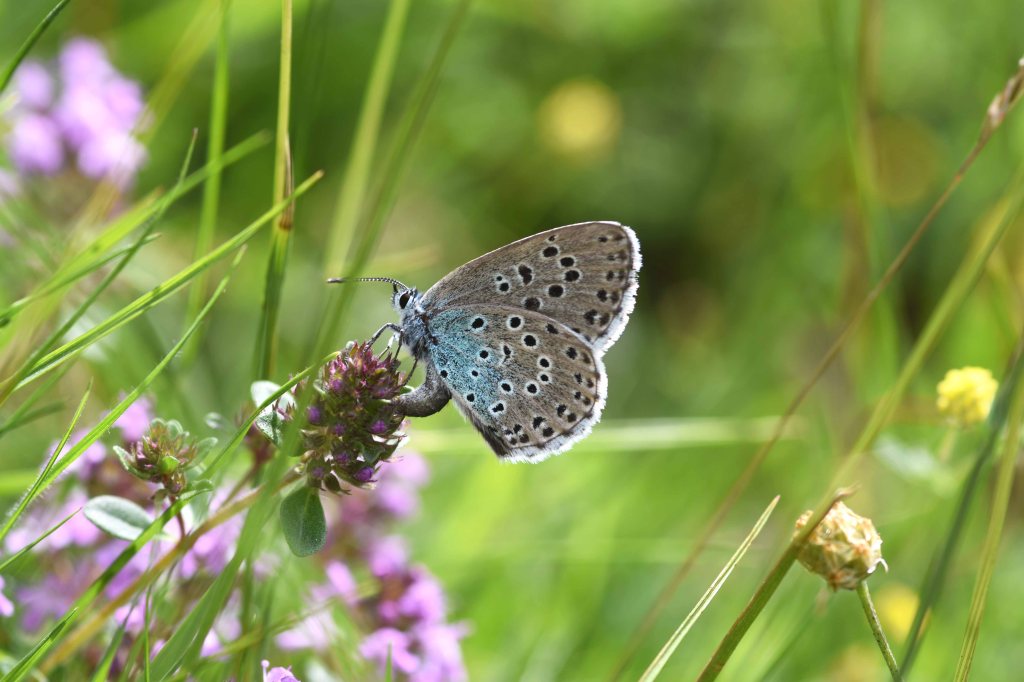
I’ll finish by showing you again just how beautiful our Large Blues, our little living pieces of summer sky have been this summer so far. Here’s to some more fine sunny days as we move into July next week.
We’ve had to pick and choose our moments to walk the transects this week because of ongoing rainy spells. That has increased the chances of us being on the hill at a time when Large Blues would be on the wing and we have enjoyed seeing them. It’s exciting to know that we are now approaching their normal peak emergence time in late June.
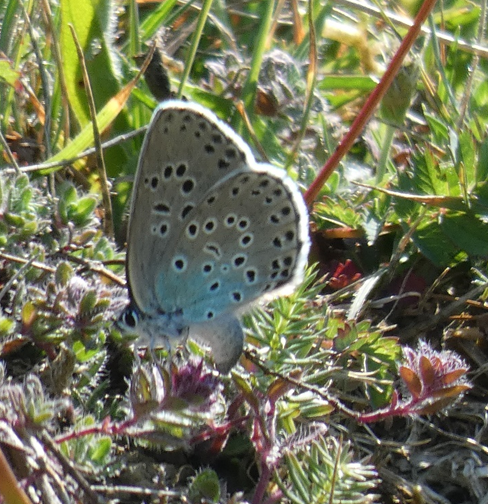
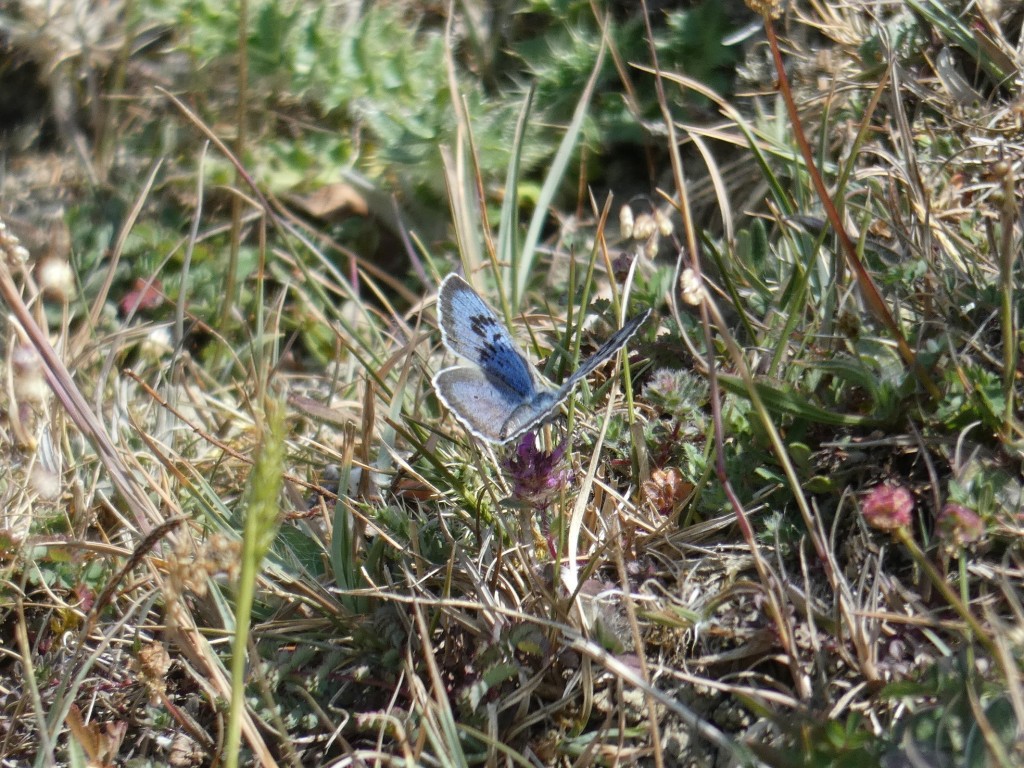
On the weekend Large Blues were around, most often around Collard Hill’s Eastern slopes. During a pretty quiet transect walk on Monday afternoon Susie was the first to spot this very nicely patterned Large Blue hanging upside down on grasses right at the bottom of the hill.
It was a beauty and we sat and watched it for a little while. Its wing markings were very clear and we think it must have been only recently emerged from its chrysalis.
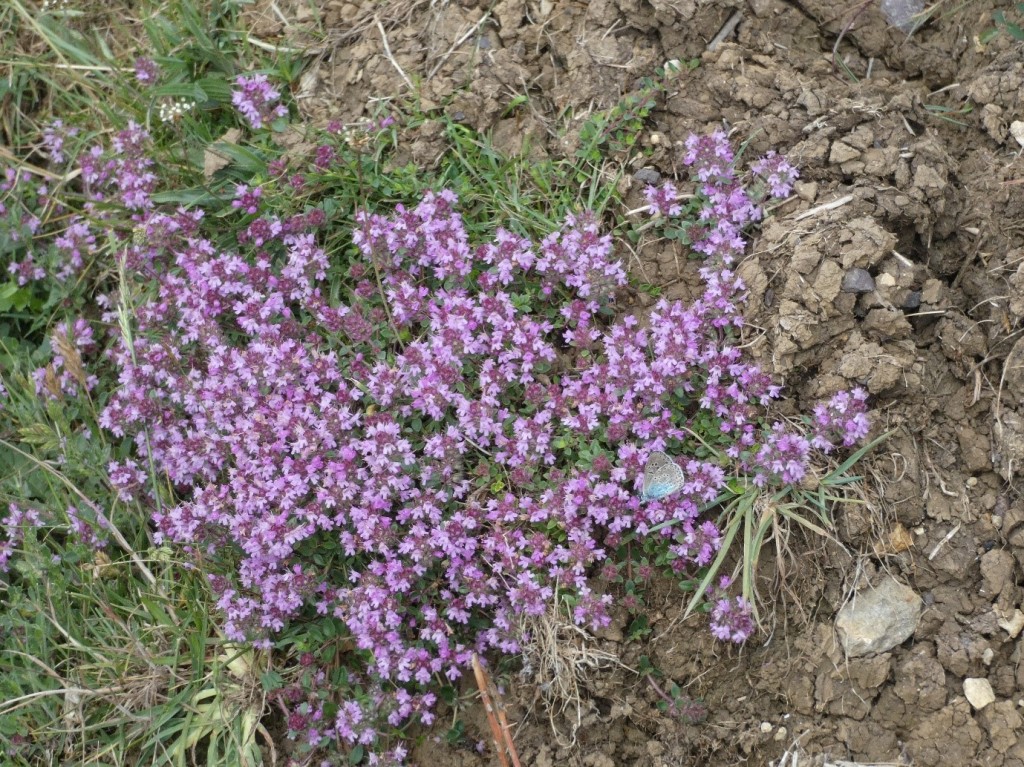
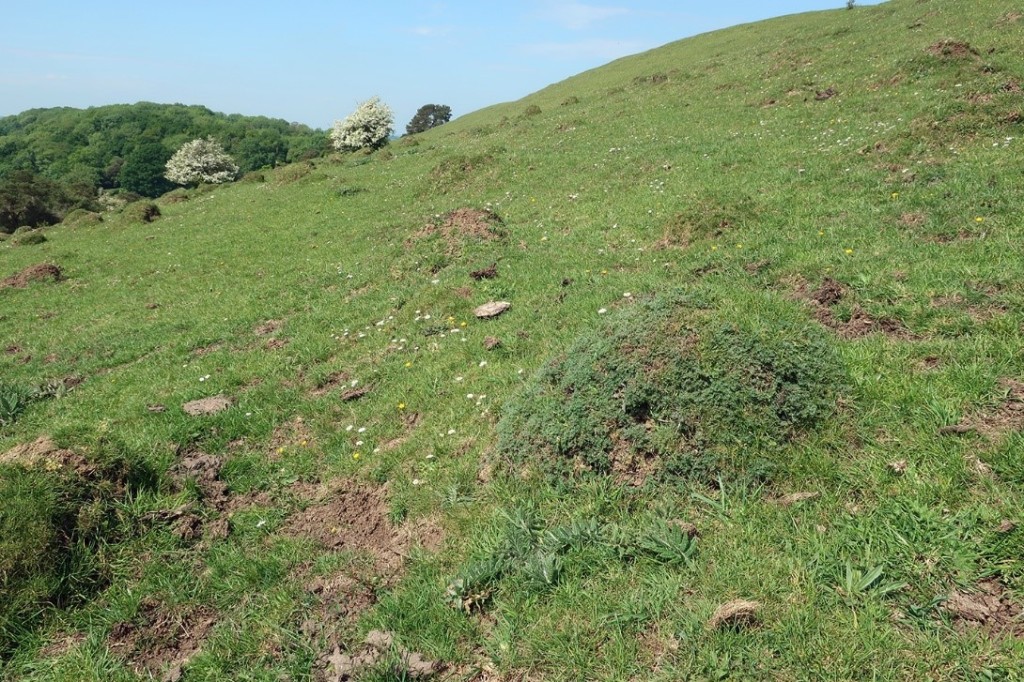
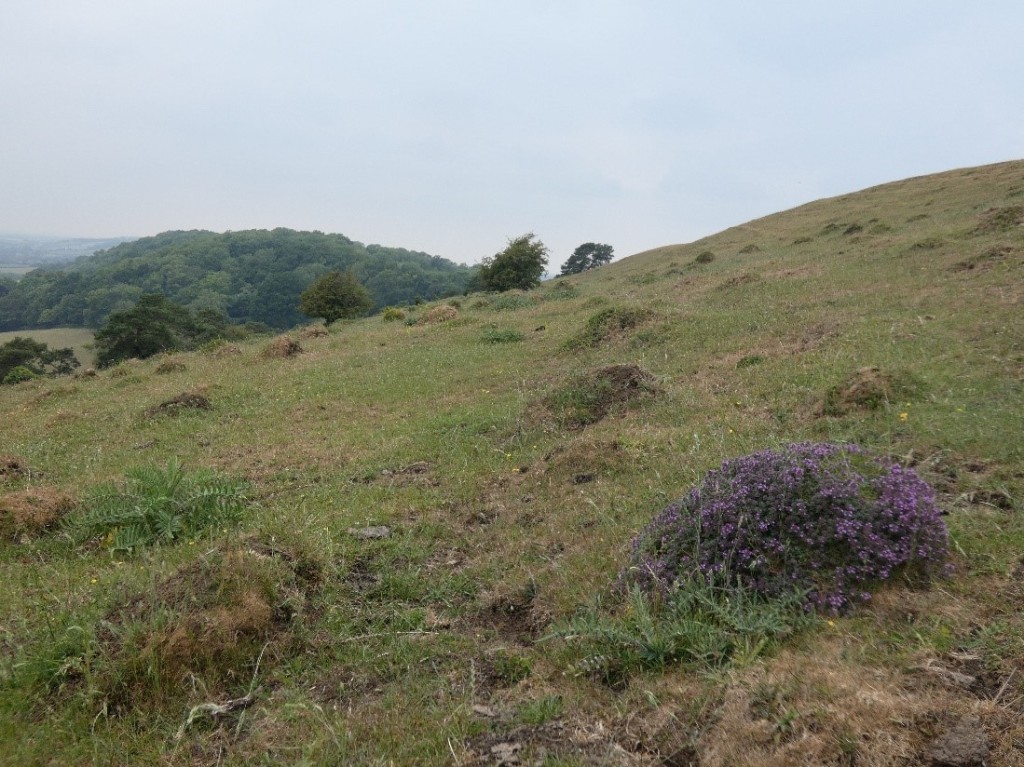
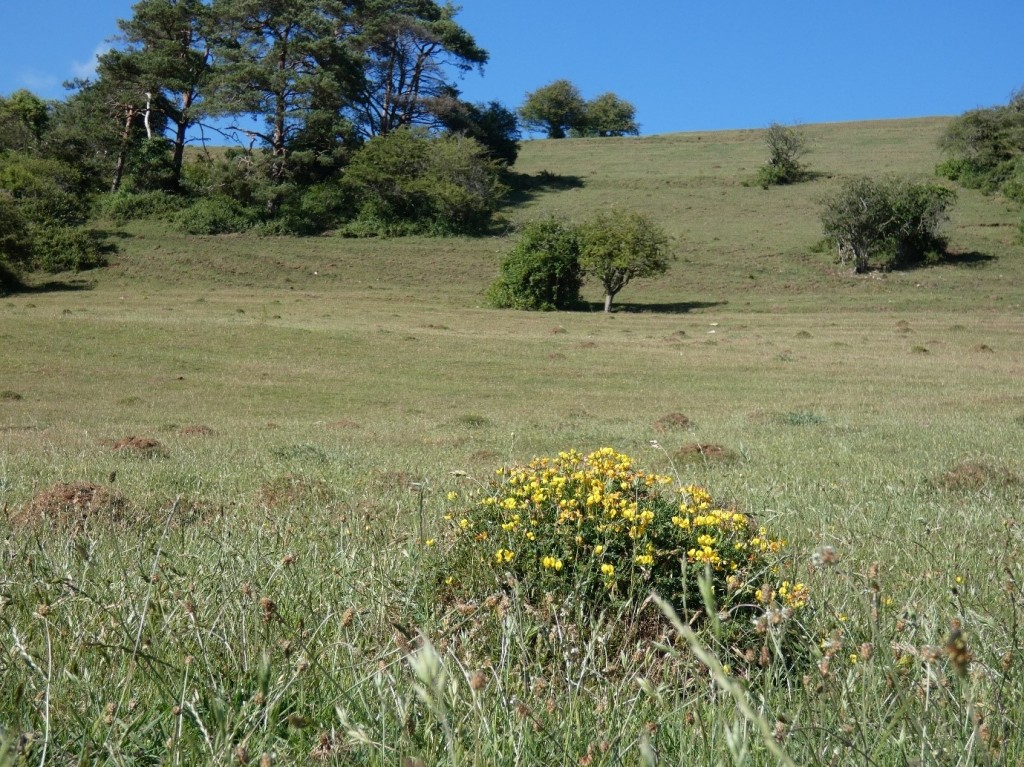
The wild thyme is out in patches right across the hill. We thought it would be interesting to share pictures of how this anthill patch has changed between May and June.
It’s nice to be able to give an update on this anthill thyme, since David Simcox’s Collard Hill Update blog on 9 May. David looked forward to the thyme flowers emerging here to provide an ideal location for Large Blues to lay their eggs. This patch is indeed now very enticing for the Large Blues and we have indeed been able to watch them laying eggs here.
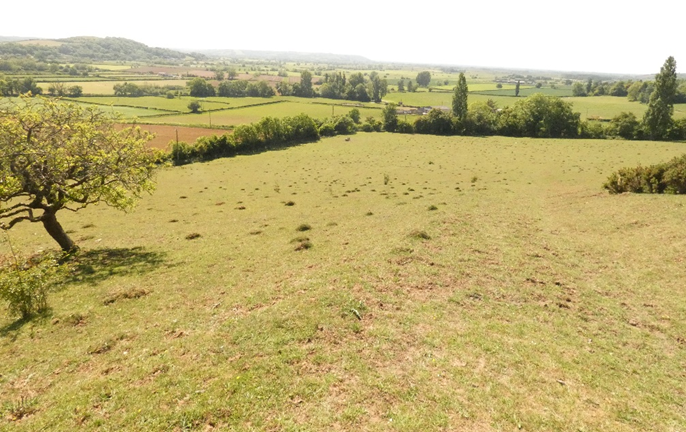
The plants on the hillside are now looking healthy, although the ground is still cracked in places after that extreme dry spell in April/May. We need to take care when walking for our own sake as well as for the sake of that amazing tapestry of wildflowers and grasses right across the hill. It’s close to a meditative exercise, staying mindful taking each step and literally being aware of our ecological footprint.
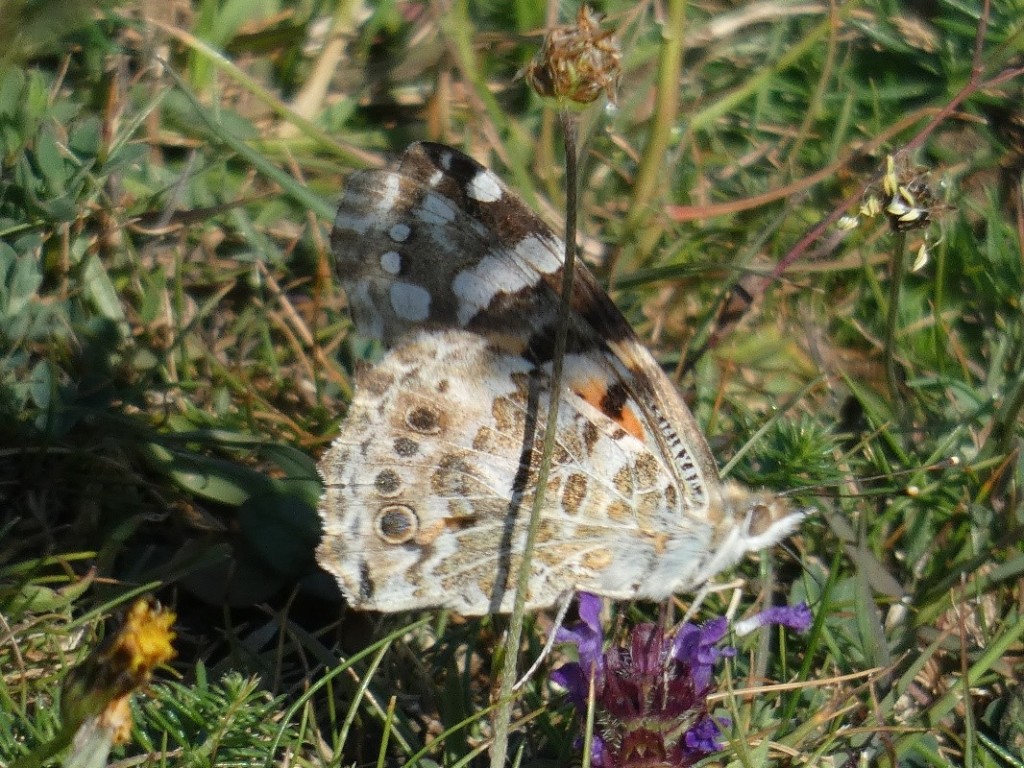
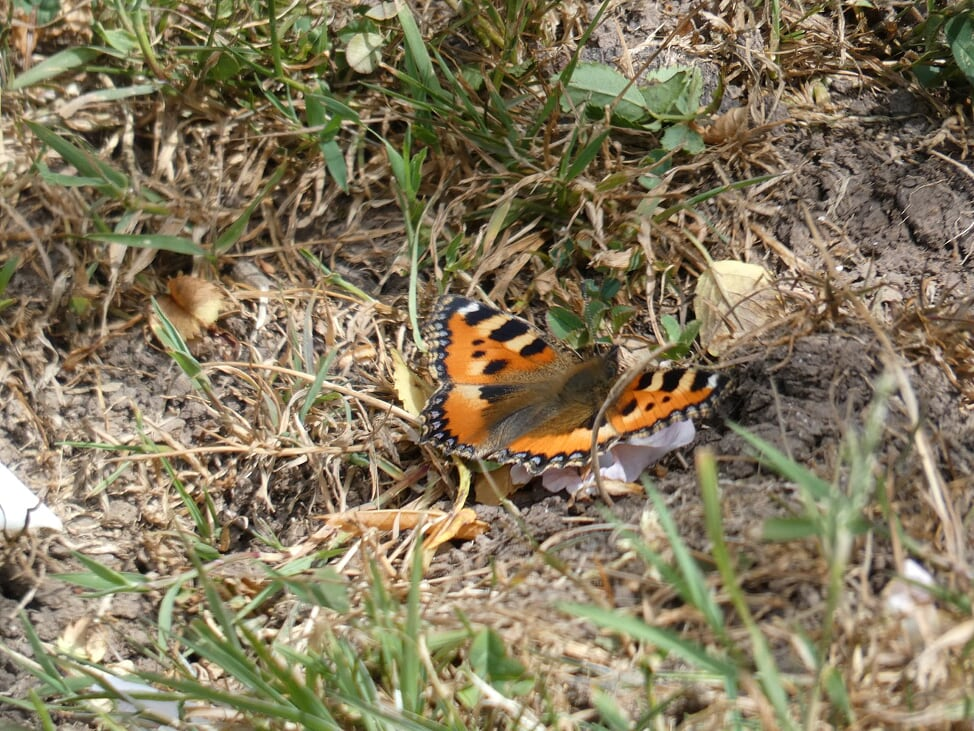
On Friday, we had 95% cloud cover and winds constantly around 10mph, the conditions were challenging and just one Large Blue made it onto our check sheet that day. On Saturday though, things improved in terms of sunshine even though winds increased to over 15mph we recorded 14 Large Blues. On Sunday afternoon it was calm and warm. We recorded a modest 8 Large Blues across the hill as well as 7 other butterfly species (Large Skipper, Comma, Small White, Meadow Brown, Small Heath, Small Tortoiseshell and Painted Lady).
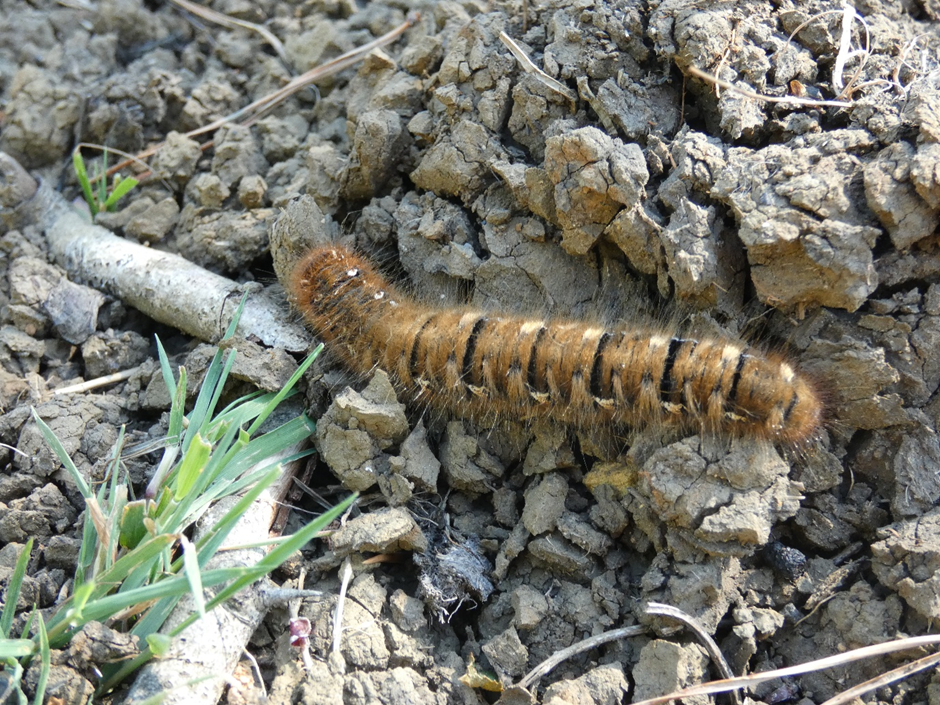
I made a nice dragonfly discovery that day too and I was excited to see a female Scarce Chaser (not recently reported on Collard Hill) as well as a rather large late-instar Oak Eggar caterpillar.
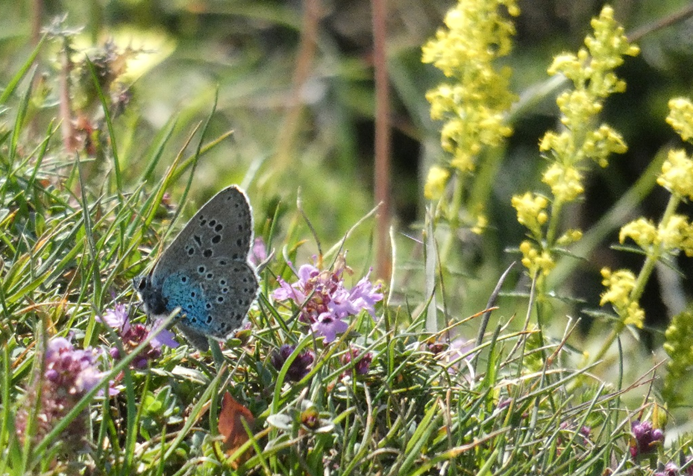
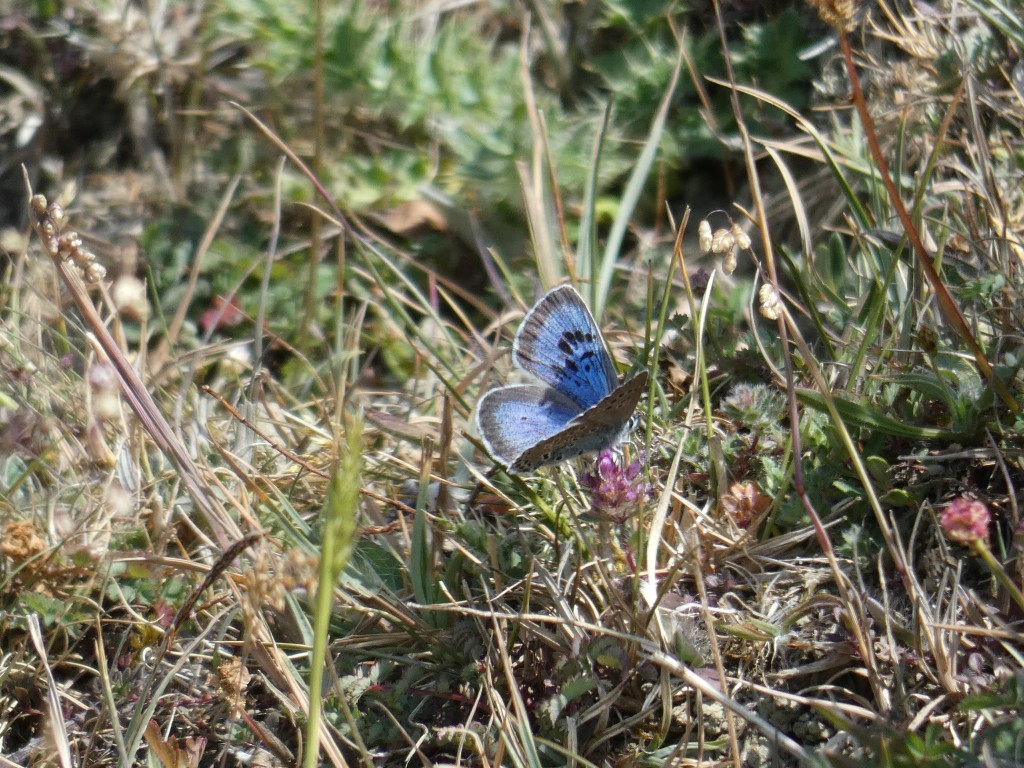
For the Large Blues, sunshine seems to be the most important ingredient for high numbers to be active. Winds appear less of a deterrent to the Large Blues coming out. We’ve seen several with wings blown sideways but still basking in the sun! This one even choosing a selfheal flower instead of the wild thyme to perch on and catch some sun on that windy Saturday.
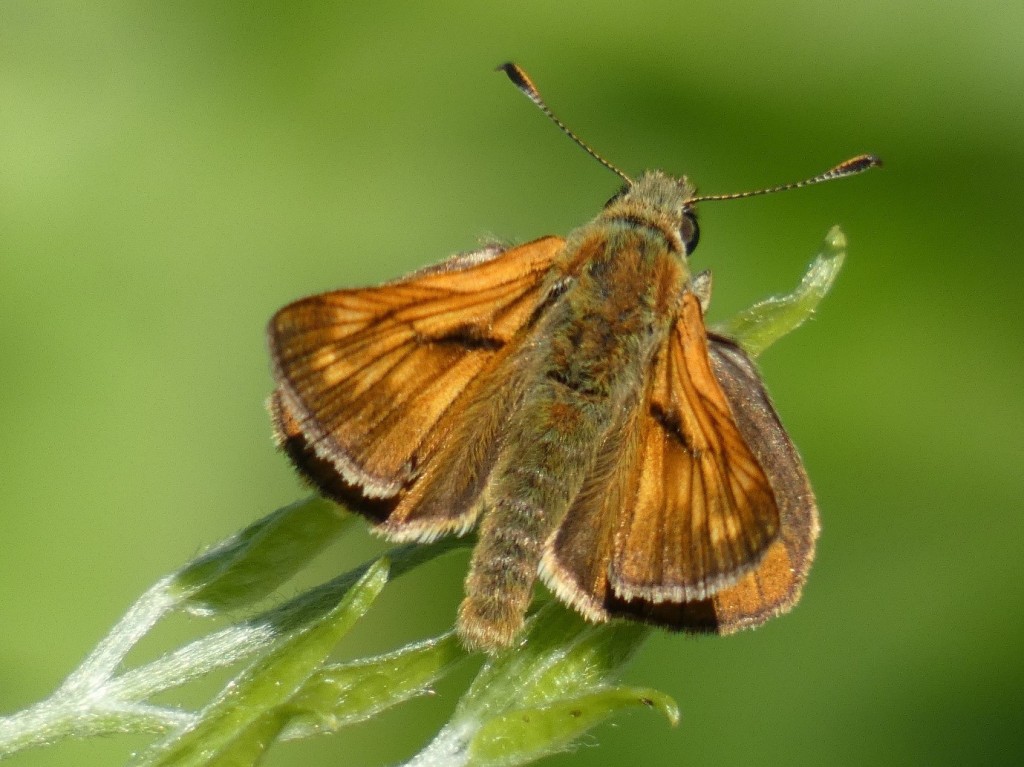
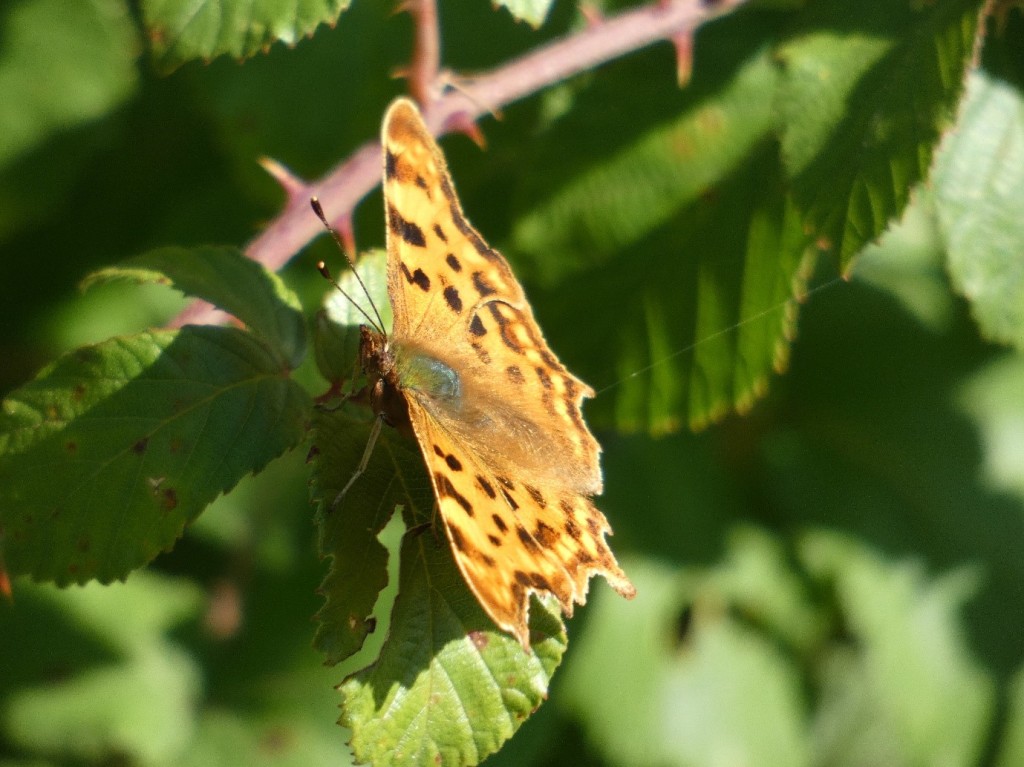
In a large patch of nettles at the bottom of the hill we watched this male Large Skipper waiting for a passing female alongside this gorgeous Comma charging up on a little solar energy. This was the second day in a row we had seen these guys in this patch and their colours were showing beautifully in the afternoon light.
It certainly feels like the recent rains may be challenging for the butterflies, but the vegetation that many species depend on is certainly loving it. Many flowering plants such as restharrow and bird’s-foot trefoil are coming through very well and will now be able to provide a good amount of nectar to many pollinating insects across Collard Hill.
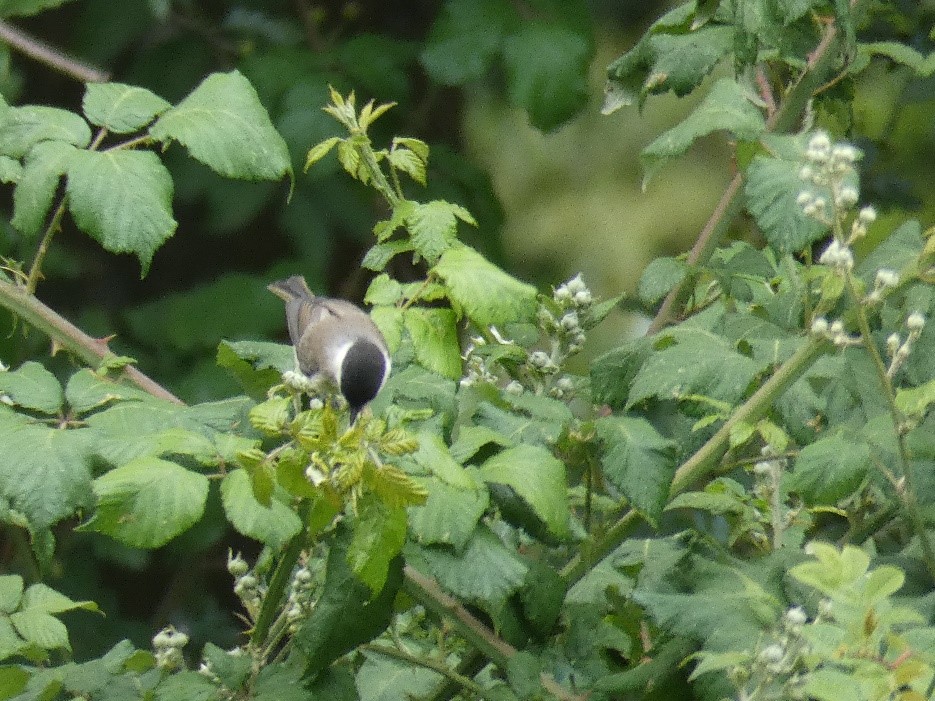
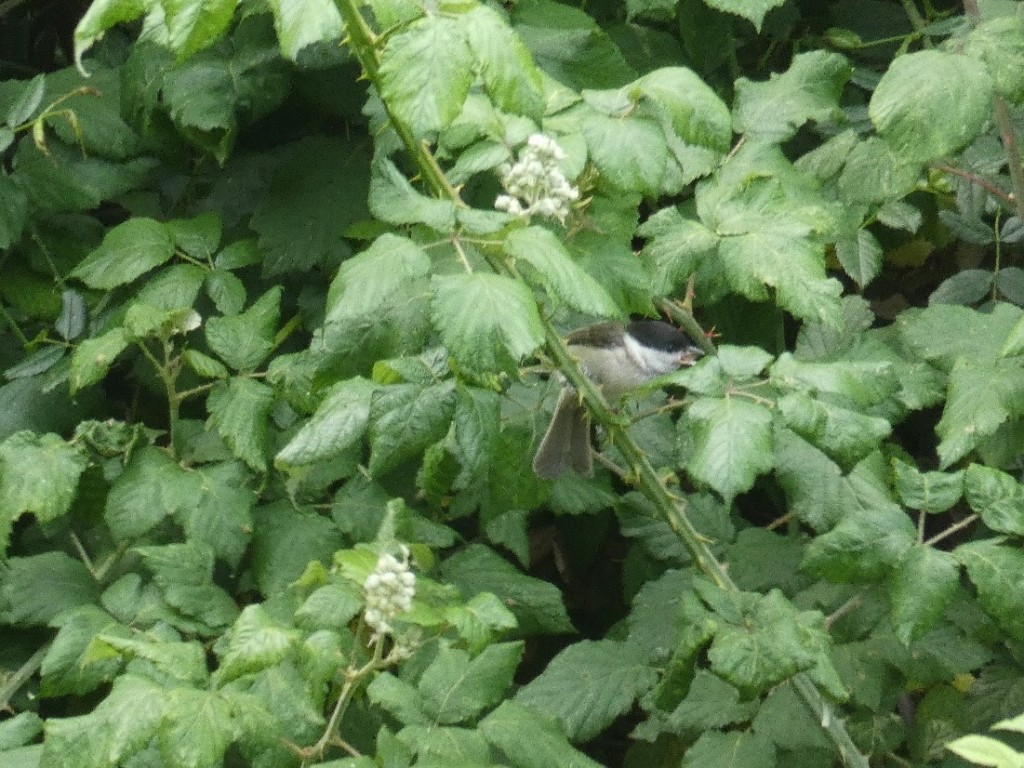
Pick of the bird sightings this week must be this rare Willow Tit. A red listed species in the UK due to recent population declines. It’s great to see Collard Hill supporting a Willow Tit, perhaps even more exciting than the kestrel that we watched hunting right above us by the east boundary hedge!
Best wishes to you all for the Summer Solstice this weekend. We hope you all have time to get out and enjoy nature somewhere near you on the longest day.
Sun and rain have been alternating on Collard Hill over the past few days and since Monday we’ve walked the butterfly transect twice. When the winds have calmed and the sun has found its way through the clouds, we’ve had some great sightings of our beautiful Large Blues, showing that they are indeed very resilient.
We’re social creatures and at a time when we don’t have so many walkers and visitors to the hill, Susie and I have felt perhaps an even stronger bond between us and the plants and animals who live alongside us. We’ve been in awe of Large blues who have cleverly found hideaways in the scrub, and we’re finding ourselves talking to them, paying them compliments and standing a little longer to watch. They have been calmly waiting out the tough patches of weather in their own clever ways, perhaps learned and refined over the 20 years they’ve been resident on Collard Hill. Susie and I have only been here a few months so we’ve got a lot to learn!
On Monday, I counted 28 Large Blues enjoying the sunshine (equalling the highest daily total on the hill this year so far). Most were in superb condition, with the odd one showing some wear and tear to its wing edges.
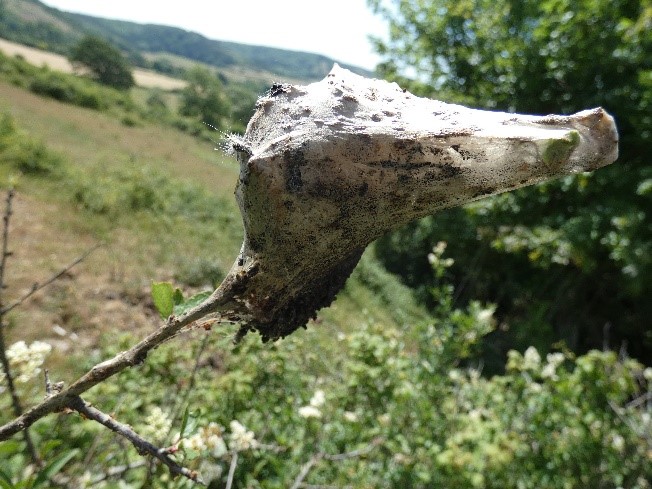
Around the hill I noted several webbed patches on foliage, and so it’s obvious that moths and butterflies have been finding their chosen food-plants to deposit eggs. I don’t know yet which species will emerge from this one, so we’ll return to it later.
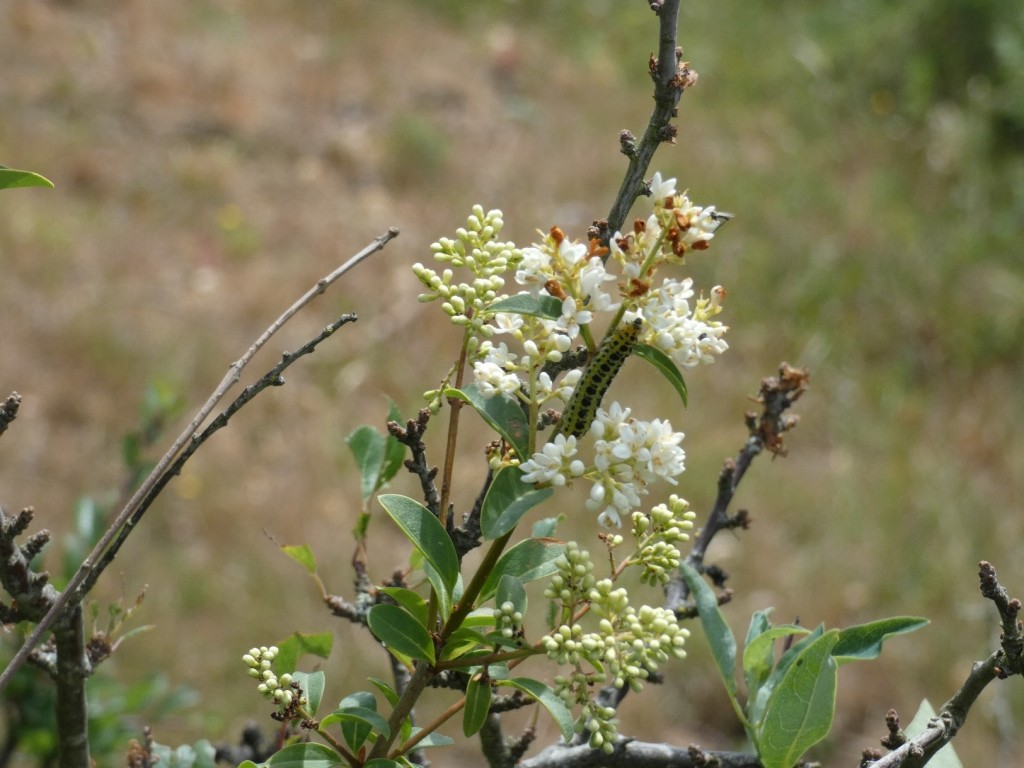
Then this late-stage six-spot burnett caterpillar caught my eye as I passed the east boundary hedge. It was very well fed!
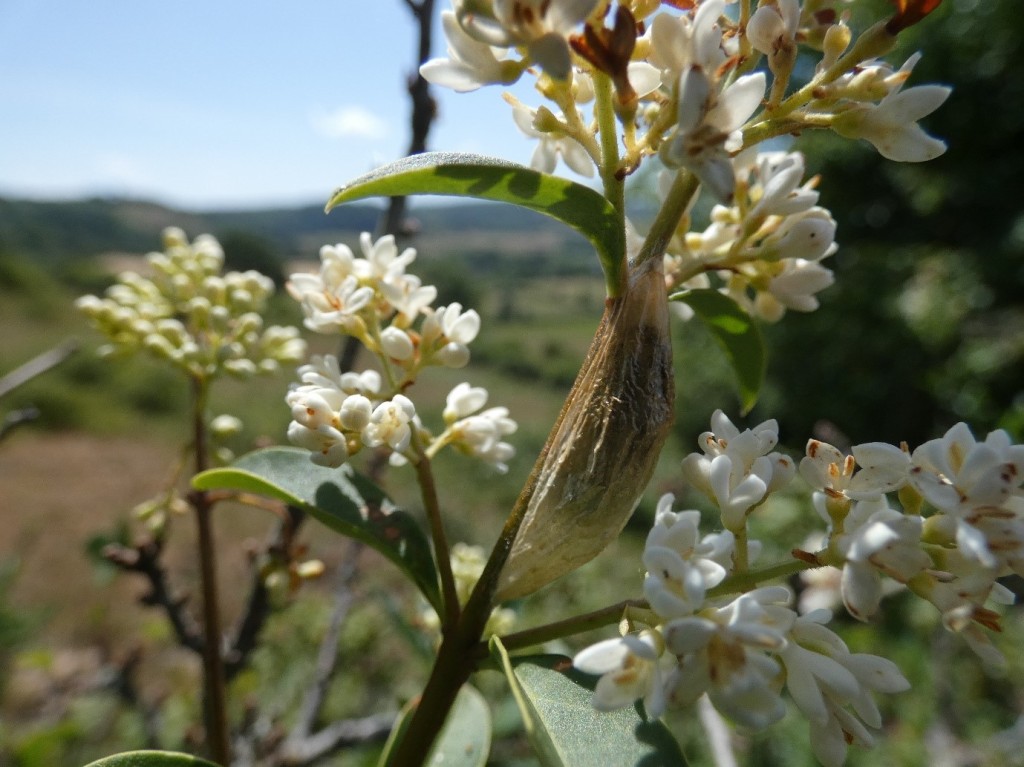
Amazingly, right in the same spot, on the same privet branch two days later I found this fascinating cocoon. Actually, I think if I’d stayed watching that caterpillar a little longer, I might have actually seen it pupate.
I’ll go back again for sure and look forward to seeing the moth emerge perhaps! Of course, it’s wildly exciting to see the large blues on the wing but perhaps coming a close second to that experience will be watching some of the other butterfly and moth species on Collard Hill throughout their lifecycles over the coming weeks too.
It’s helped me to remember that metamorphosis for a caterpillar certainly isn’t just a process of taking a rest and attaching some wings. It isn’t a clean and easy process. With so much conversation happening about our own lives having to change due to the coronavirus outbreak it’s amazing to be able to follow some natural world metamorphosis this summer. I’ll really hope to spot the adult six burnett in the next few days. It’s one of our favourites!
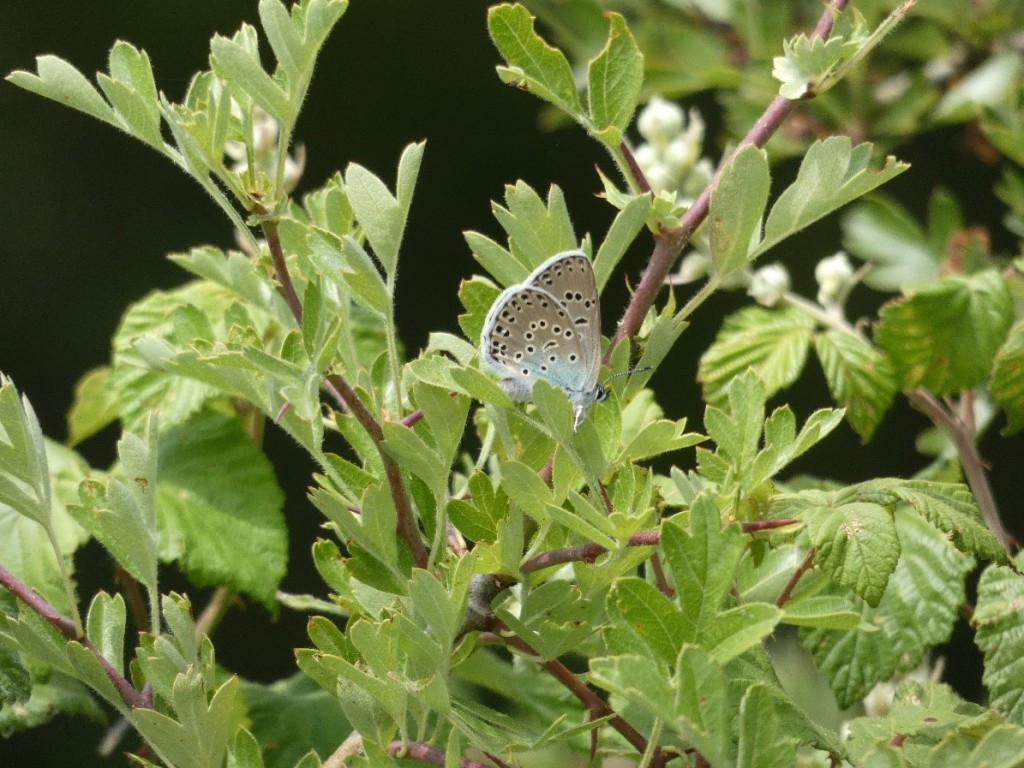
We noted the first appearance of Large Blues in the lower levels of the hill this week. Sections of the transect which had previously been empty of butterfly life, suddenly have several Large Blues and others present. It has really helped that Susie’s distance vision is incredible. On Wednesday, Susie was the first to spot this one tucked away in Hawthorn on the west end of the hill below the conifer trees.
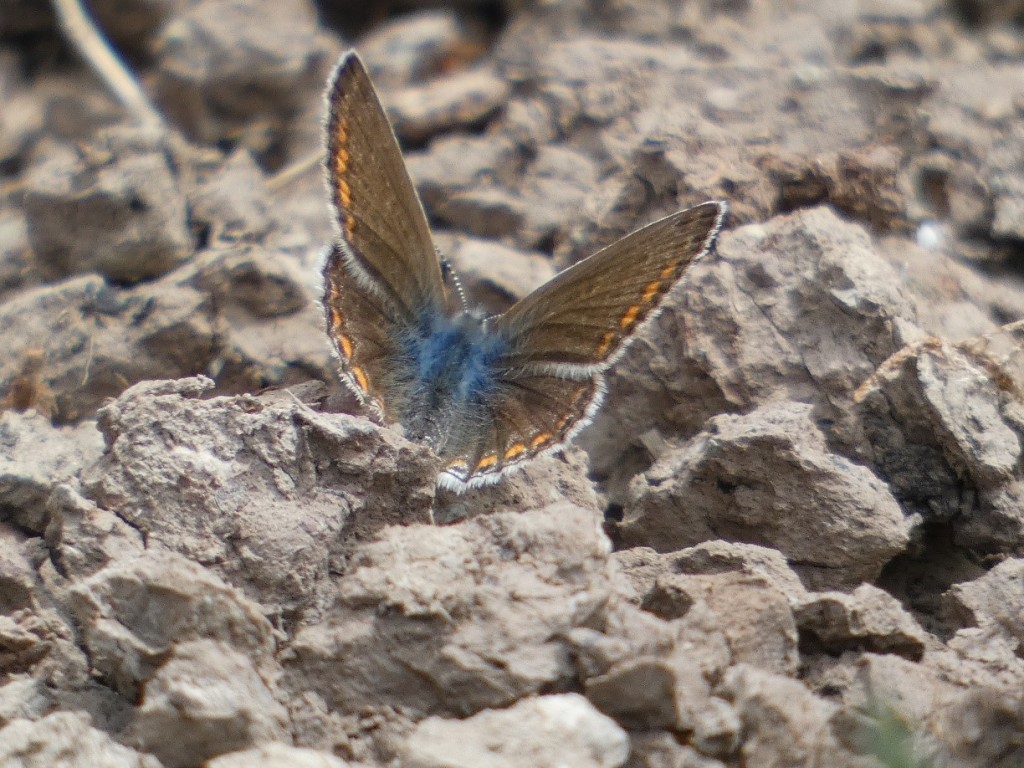
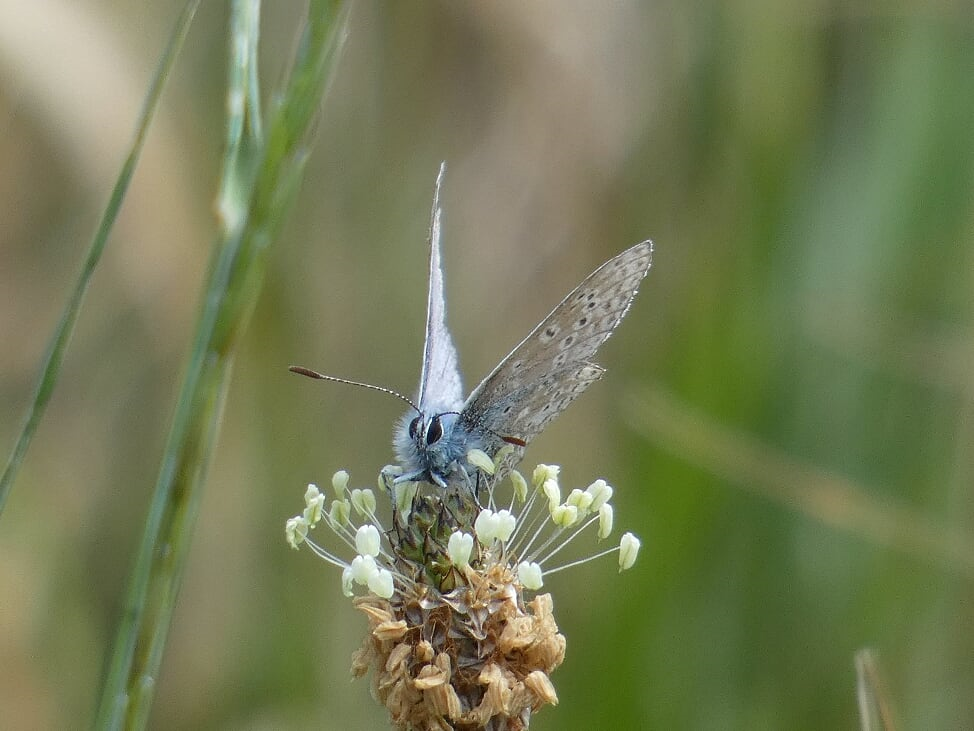
Susie then also spotted this gorgeous Common Blue female who had quickly moved onto the path to warm up as the clouds parted.
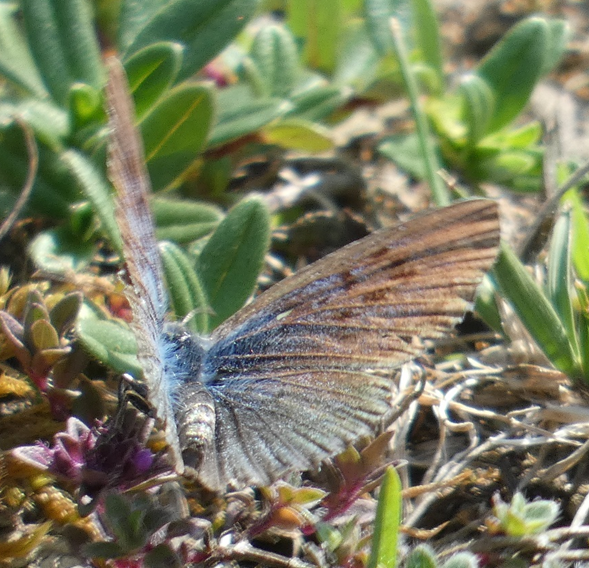
The Large Blues have been stopping still to sun themselves more often this week and I have managed to get some nice photos. For anyone interested, I’m using a bridge camera with a strong zoom range so that I can be quick to capture anything at any distance. The light as helped me to get some sharp, bright shots which I hope you enjoy.
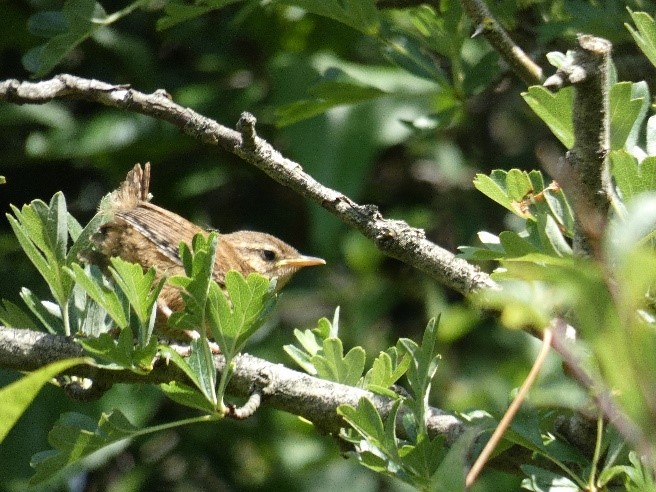
Although at times it’s not been dry enough for the butterflies to emerge, there have been some stunning creatures around. A very energized group of Long-tailed tits still regularly chatter all around us under the pines as we walk through. Several fledgling wrens filled the scrub near the top of the slope on Monday and across the whole hill the birdsong has been beautiful.
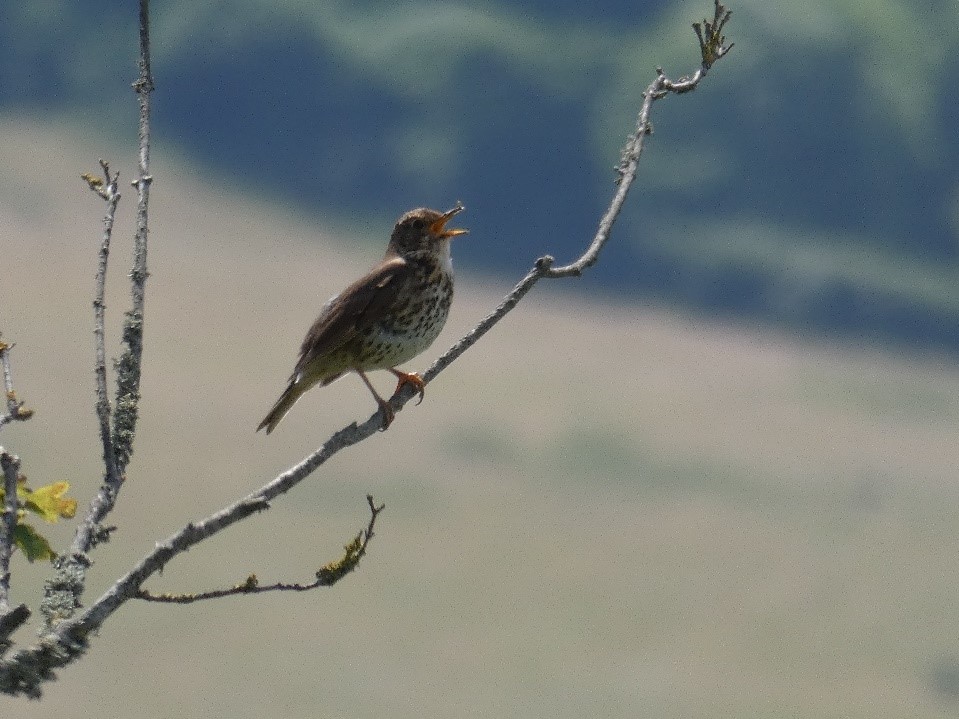
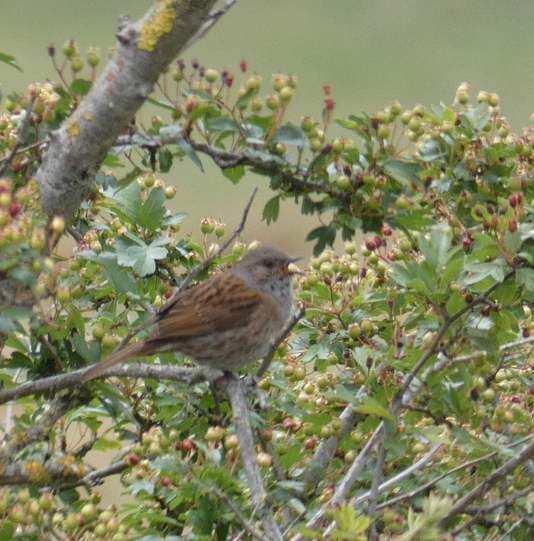
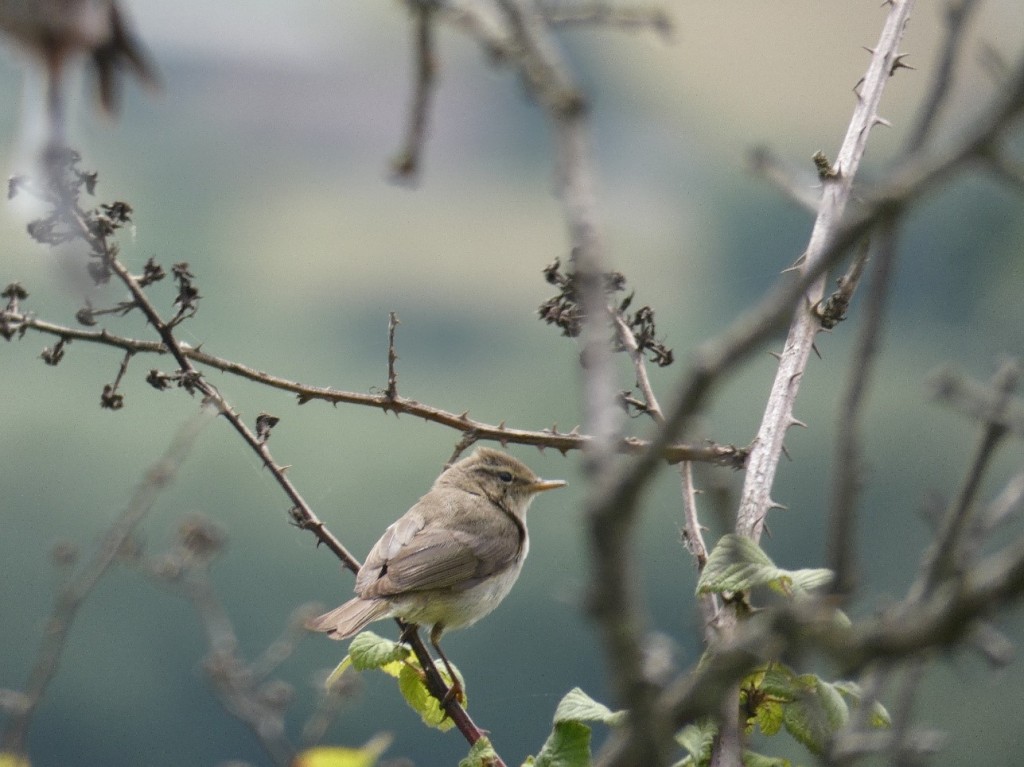
I thought I’d share a few pictures of the songbirds. Blackcap, dunnock, song thrush and chiffchaff song has been rising from the hillside and hopefully seeing them might bring back memories of the hill from previous visits you might have had. A little frustratingly I’ve still not photographed the gorgeous lesser whitethroat yet though… he was singing clear from the hedges at the north east corner on Monday but is elusive to the eye… Perhaps next week!
Song thrushDunnockJuvenile chiffchaff
I’m hoping that the much-needed rain that’s falling this afternoon (Thursday) is going to work it’s wonders and then move on, leaving the butterflies with some more fine, sunny, flying days.
That’s all from us for now. Thanks for reading and take care.
So, here we go! It’s official the 20th generation of Large Blues on Collard Hill have arrived! Last weekend saw the first Large Blue butterflies emerge from the ant nests (myrmica subuleti) under the ground where they’ve been kept safe during that very wet and windy winter of 2019/20. I’m sure I don’t need to tell you avid readers that the Large Blue Butterfly Species Recovery Project has been working now for 20 years at Collard Hill, using expert conservation methods to care for the land in a way that will help pull this butterfly species back to healthy numbers in the UK after it tragically went extinct in the late 1970s. 20 years of making a comeback on Collard Hill, here’s to another 20 years of survival success and more for this gorgeous population of Somerset butterflies.
Large Blue ButterflyMaculinea ariononWild ThymeThymus polytrichus – Collard Hill 30 May 2020
As Susie and I recently joined the team, we feel immensely privileged to be joining at this exciting point and we’re really enjoying being so thoroughly immersed in all the wildlife of Collard Hill on a daily basis. This regular dose of “Vitamin N” (or vitamin “Nature”) has been keeping us healthy during the covid-19 outbreak and we really hope this blog will be a little dose of positivity for you too. Sharing our experiences of these wonderful little blue beasts regularly we’ll try to brighten your day a little and perhaps some of our discoveries will help to lift your spirits through these challenging times.
So below are our personal favourites and highlights of all the amazing wildlife we saw in the past week, our first full week of walking the butterfly transects on Collard Hill.
Last week we told you how we’d been doing a little groundwork, surveying the ecology of the hill while we waited for Large Blues to emerge with anticipation. We monitored animals and plants and notable highlights for us were several singing migrant birds. Warblers including Blackcap, Chiffchaff Whitethroat, and Lesser Whitethroat calling loudly from the scrub were great to hear. From the last week of May, we also started to hear a large family of long tailed tits making their way through oak trees right at the bottom of the hill. Walking under the pines at the West end of the hill we spotted a group of fledgling tree creepers learning (quite painfully by the looks of things) how to land on the tree trunks at speed! Last week we shared a list of grassland flowering plants in our introductory blog and it was nice to hear back from a blog reader about his personal favourite, the Wooley clover. I hope more blog readers will want to join in and comment on or discuss our future findings too.
It really has been a brilliant week of discovery for us. This is our first year living close to the Collard Hill Large Blues and straight away it seems they surprised not just us, but many others following them as they emerged very early on the 29 May. By the 1& 2 June our counts across Collard Hill recorded 15 and then 16 individuals. On Sunday (7June) we saw the highest of our counts so far. We recorded a fantastic 28 Large Blues spread across over half of the 7 recording areas we walk on the transect each day. Seeing them in May did feel early, and there are many similar stories being told in the national press of an early arrival of the UK’s “butterfly season”. I hope the information we’re gathering this year helps to paint as accurate a picture of the behaviour of our local Large Blues as possible.
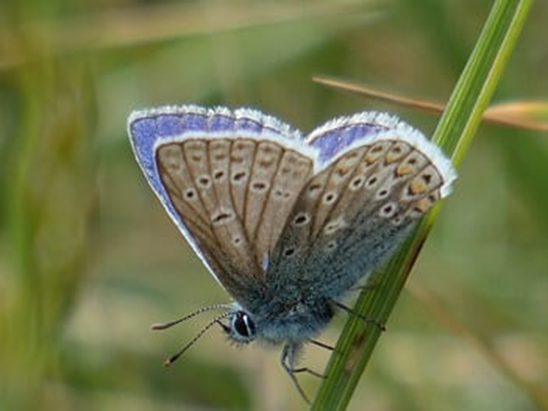
I was getting used to seeing numerous Common Blues in late May. Many of these were male and females pairing up in mid-air and choosing to mate, often right at my feet.
Male Common Blue Polyommatus Icarus – Lollover Hill 27 May 2020
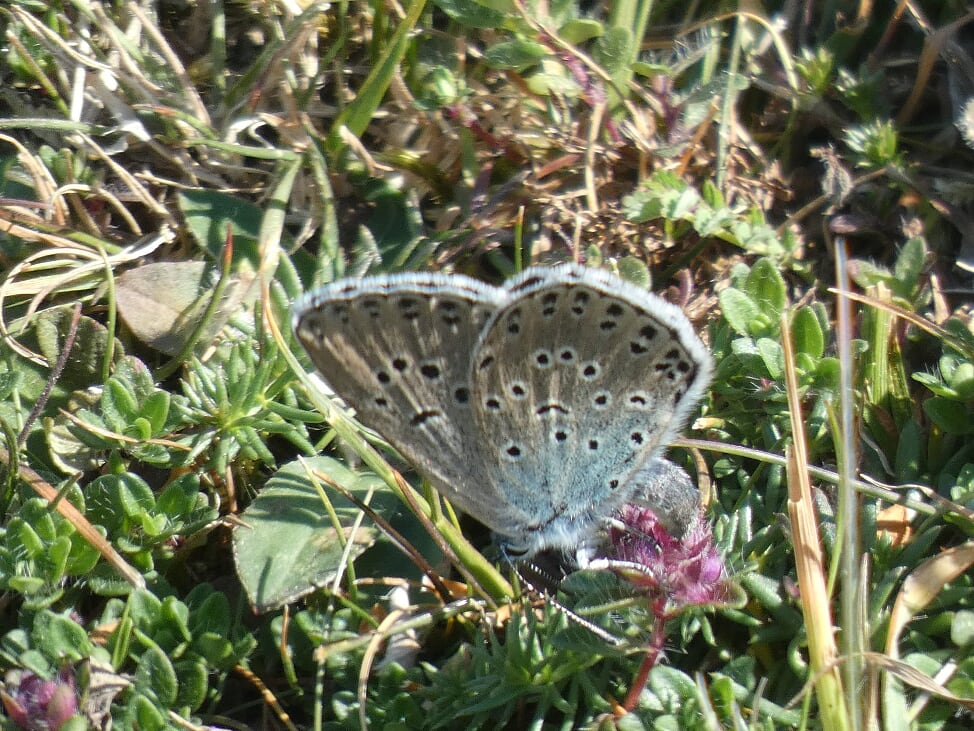
While I was still eagerly searching for that very first Large Blue, this quite worn looking male Common Blue did almost fool me for a moment on Lollover Hill on the 27May. I shared my images with David, our lead project scientist and we discussed how it had none of the orange markings left on its underwings, probably after so much time on the wing. Also, the lack of those distinctive black markings on the upper wing surface and a very different pattern on the undersides ruled him out. Not a Large Blue!
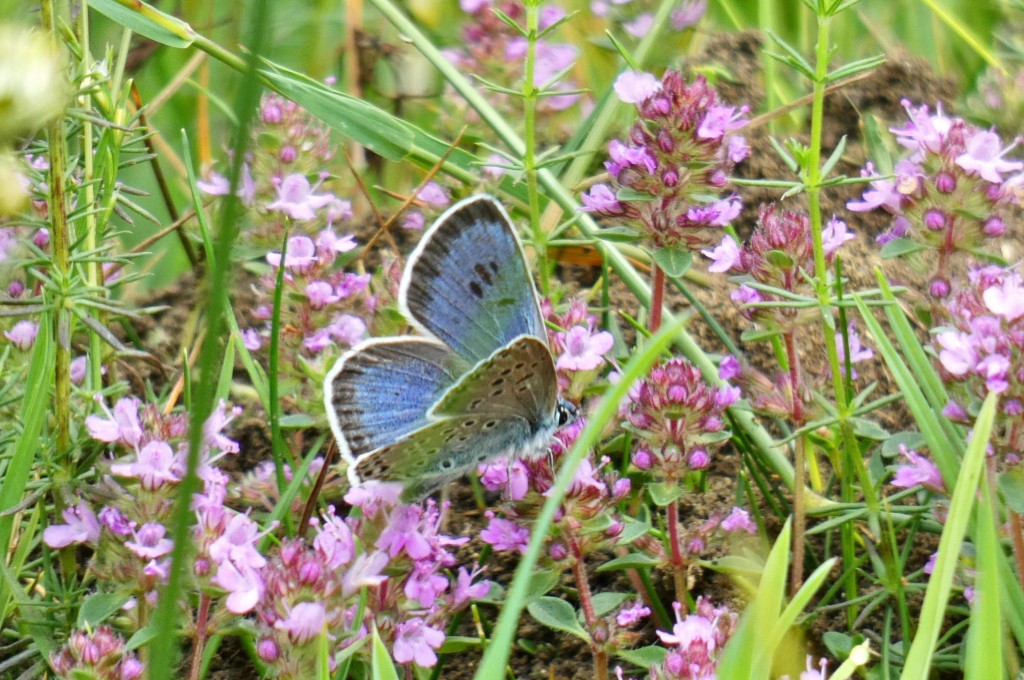
And then.. there they were! I walked an early morning and a late afternoon transect on Friday 29May, only recording Common Blues, no Large but in the evening I was alerted to a post online to say a member of the public had dropped in when passing and seen a Large Blue. On my transect the next day, Saturday 30 May I very happily verified that Large Blues had indeed started to emerge on Collard Hill! On Monday the 1 June I got video footage of one female on a thyme bud and while I was really aiming to film her with wings open, she actually went one better and laid an egg on film, and then opened her wings. It felt incredible, knowing that they were already getting on with reproducing within a day or two of emerging from the ant hills! We’ve all been quite conscious that the dry spell of weather right through April and May could affect the ecology of Collard Hill. The ground has become hard to walk on, that’s for sure but with less water to use, many plants (including the grass) could have started to struggle. The Large Blue butterflies will only lay their eggs on wild thyme (occasionally on wild marjoram if it is in bud during their laying season) so the condition and blooming of Thymus Polytrichus is a vital part of the ecology of Collard Hill. Even when the grass in places was looking shrivelled and dry, the thyme looked just fine. On our surveys we recorded that thyme buds were opening on 24 May and I was really impressed with the thyme plants as the dry spell went on, their flowers emerging in purple patches across the whole hill and as it turns out, right in time for the emerging Large Blue butterflies. A little bit of nature in harmony!
Large Blue laying an egg on wild thyme flower bud 30 May 20
There was a very welcome shift away from burning hot weather on Wednesday 3 June, when we had some very welcome rain and temperatures dropped. We watched the Large Blues going for shelter and, instead of only targeting Thyme plants, searching for and perching in a range of other plants, like bramble and stinking iris to avoid the cold and rain.
Many of the other butterfly species are busily feeding on nectar or soaking up the warmth of the strong sunshine we’ve had recently.
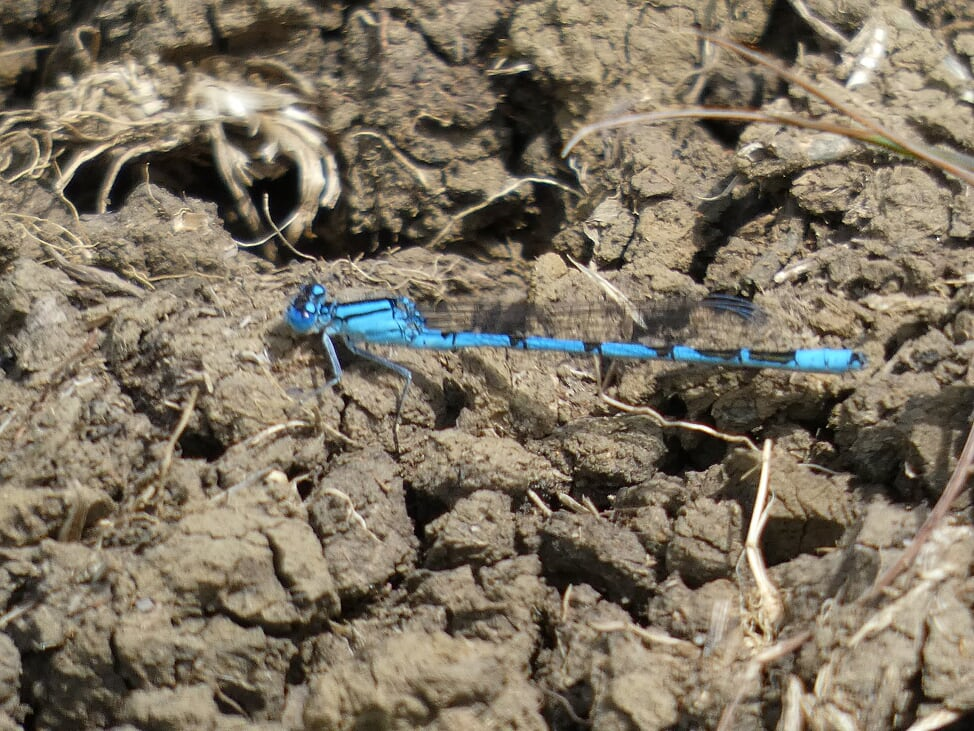
Both the male and female Common Blue Damselfly have drifted by us on the main paths on Collard hill. It really is worth looking out for these tiny, almost alien looking creatures. When I’ve taken the time to look a little closer I’ve found it’s almost impossible to tear my eyes away again. I’ll definitely do my best to capture as many views of these fantastic beasts with you as I can over the coming weeks!
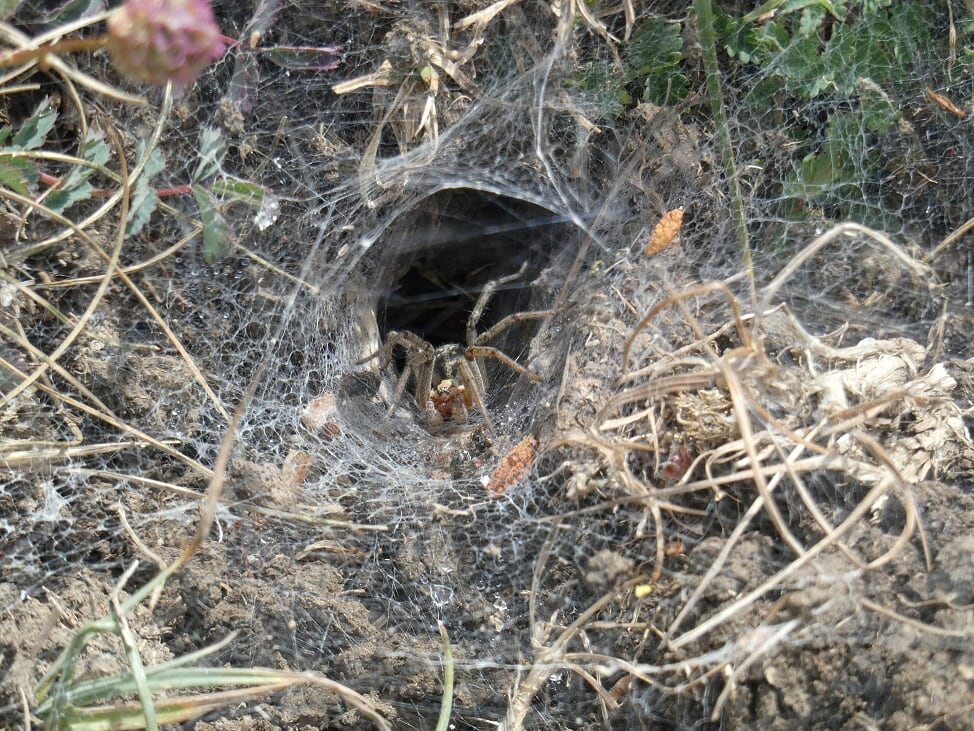
A photo tour of Collard Hill in late spring wouldn’t be complete without some views of the funnelweb spiders. They belong to a group Agelenidae, which, with their very effective web-producing spinerettes are closely related to our large house spiders and in the UK in fact we just have one species, Agelena Labyrinthica, the labyrinth spider. Every day we visit we see them the slopes have are occupied at regular intervals by their silky web homes, creating the appearance of a miniature arachnid village. Recently I’ve spotted a spider standing on every one of the “doorsteps” as I pass by too. I think they’re waiting for a food delivery!… now where have I seen similar behaviour recently?
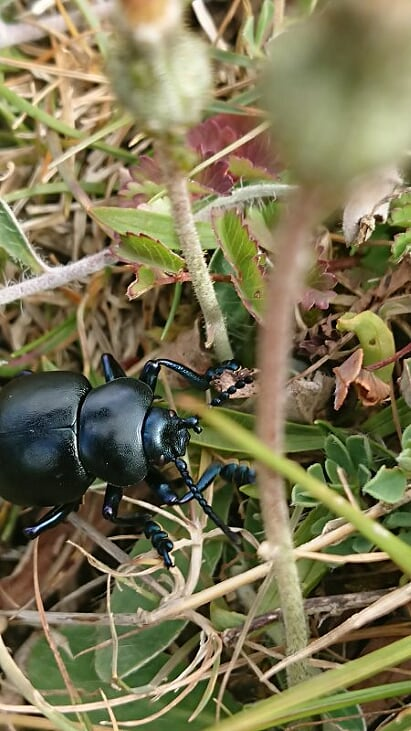
Another incredible invertebrate character we met on the path was this bloody-nosed beetle.
I loved watching him walk across the vegetation and I was especially impressed with his feet. Just look at the incredible shape of them!
Westfield and Hatch Hill
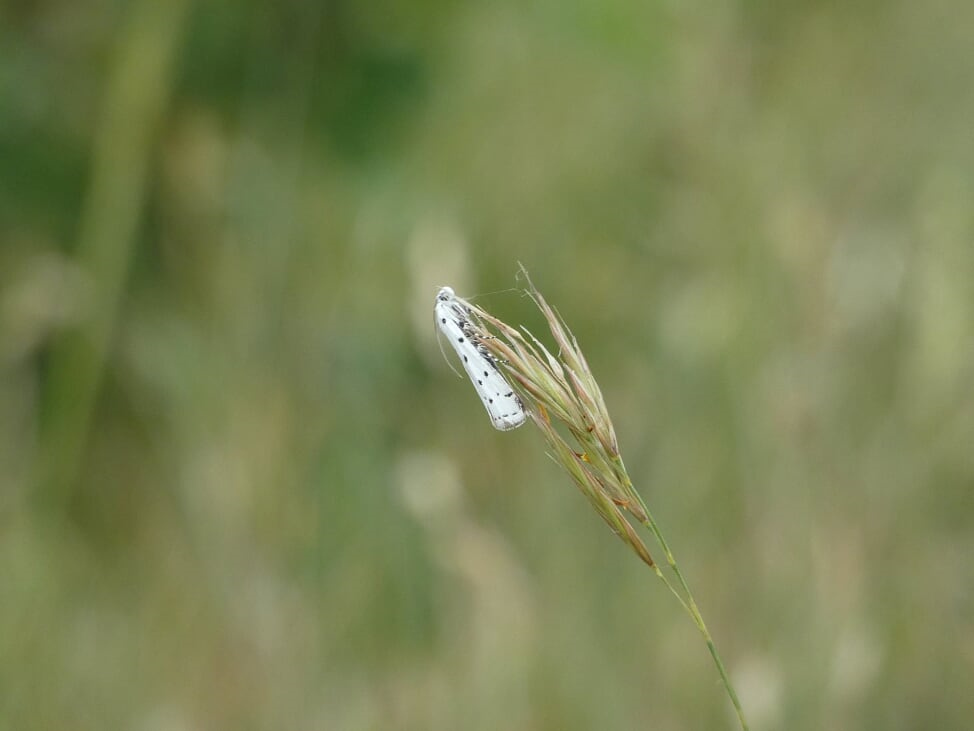
We discussed this little guy with moth fans online recently. The classic ermine moths are well liked but this guy is actually a member of a larger group of moths, the Pyralids or Knot Horns.
As we explore the surrounding hills, looking to see how far and wide the Large Blues may decide to try spreading out, we often spot dragonflies (like this beautiful scarce chaser) and other very important butterfly and moth species and we’re really looking forward to sharing more pictures and stories about of these creatures in future blogs.
That’s all from us for now. We hope you enjoyed our blog and that it’s helped you to take look into the wildlife of this fantastic National Trust nature reserve. We really hope you’ve been able to watch some great wildlife this spring in wild spaces near your homes too. Nature for us brings so much positivity!
By way of a first report Susie and I have worked on this overview. We’re really excited to be Large Blue volunteer rangers for the National Trust this summer. I’m James, a furloughed Membership Manager for RSPB in Somerset & Dorset and I have a background in zoology and nature conservation. Susie is a plant enthusiast, very keen walker and explorer and still working through the Covid-19 lockdown as a Social Worker. Susie and I have been using any exercise time we can get within the government guidelines to go walking and exploring the footpaths and hills around our new home.
We find the countryside fascinating and recently moved to a village local to Collard Hill. One of the reasons we chose to live in the village was it being so close to such important wildlife sites in Somerset. We care very much about helping nature and the fact we have a species coming back from extinction in the UK right behind our little village is brilliant! I have been aware of the brilliant blogs run by the NT Ranger team in recent years and the more we all stayed in lockdown in late spring the more I started to wonder how it might quite worryingly affect the ability of volunteers or staff to monitor Collard Hill. We decided to ask the National Trust if they could use any local help, after all Susie and I have been lucky enough to be able to reach Collard Hill regularly on walks from our front door since right at the start of the lockdown. When we heard that there was indeed a risk that the valuable information about the Large Blue butterflies this year could be missed, we decided that we would help and do as many surveys as we could during the butterflies’ flight time this summer.
Collard Hill, sector 1, 26 May 20.
It’s been an interesting first half of the year to put it mildly, with the heaviest winter rain since records began followed by the driest April and May on record. This year’s ecological information could be really important, and we want to help the NT and their scientific advisors to monitor what affect this might have on the Large Blue butterflies and other wildlife of these beautiful nature reserves.
We’re now balancing our own time between doing these very interesting wildlife surveys on Collard and surrounding hills, Susie’s work and also grafting away at making our new garden down in the village as wildlife friendly as possible. We really hope to help wildlife as much as we can, and who knows what we might see coming to explore the nectar-rich plants we’re planting in our garden!
Collard Hill, 18 May 2020, Sector 4.
To get ourselves familiar with the botany of Collard Hill (and to contain our excitement in the days before the Large blues emerged!) we did a Plant presence survey 18th – 24th May)
Welcome to the first blog entry of 2020, which brings with it some changes to the norm. No reader will have failed to notice the fact that this spring has been exceptional. The arrival and subsequent impacts of coronavirus has meant that everyone, National Trust included, has been locked down and limited in our responses to developing situations. As such, we have been unable to recruit a dedicated large blue butterfly volunteer this year, mainly due to the uncertainty around how the situation would develop.
This is not, however, the end of the story, as two locals from Compton Dundon for whom Collard Hill is a local walking patch have offered to check up on our large blues for us during these uncertain times. This is fantastic news, as having no data this year would represent a significant dip in a very long term data set. Records this year will be particularly pertinent, as we have had several severe weather events in the lead up to the flight season which it will be interesting to see the butterfly’s response to.
An incredibly wet winter, followed by an incredibly dry spring growing season, has meant that the sward of Collard Hill is still very short, something that may prove beneficial for the ants, but may hinder the butterfly in its reproduction. If the thyme flowers out of synchronisation with the butterfly flight season, this will have longer term repercussions on the local population. As many of these severe weather events have, at some level, been linked to climate change, this year’s data could be very important indeed.
The fragility of the site also means we are taking a different approach to the site this year. As we are still observing social distancing, so visitor congregation is not at present something we are looking to encourage, and as the plants are potentially going to be small, few and fragile, we are recommending that visitors think very carefully about coming to Collard Hill in pursuit of the butterfly this year. The site is open as usual, but there will be no waymarked routes, and there will be no active promotion of the site this year. As such, if you do choose to visit Collard Hill to search for the large blue, please do so with increased consideration for the condition of the habitat and observing government guidance on social distancing. Of course this is disappointing, but we need to ensure that the safety of our visitors and our rare species are at the heart of what we do.
Thankyou for your collaboration in this, and here’s hoping for a good season for this unusual, fascinating butterfly.
My six weeks of being large blue ranger is now over, it’s gone so quickly and I’ve had the best time; it was the perfect job to do after a stressful final year of uni! Collard Hill has been a lovely place to be for a few weeks and I have seen plenty of butterflies and other creatures during my time up there.
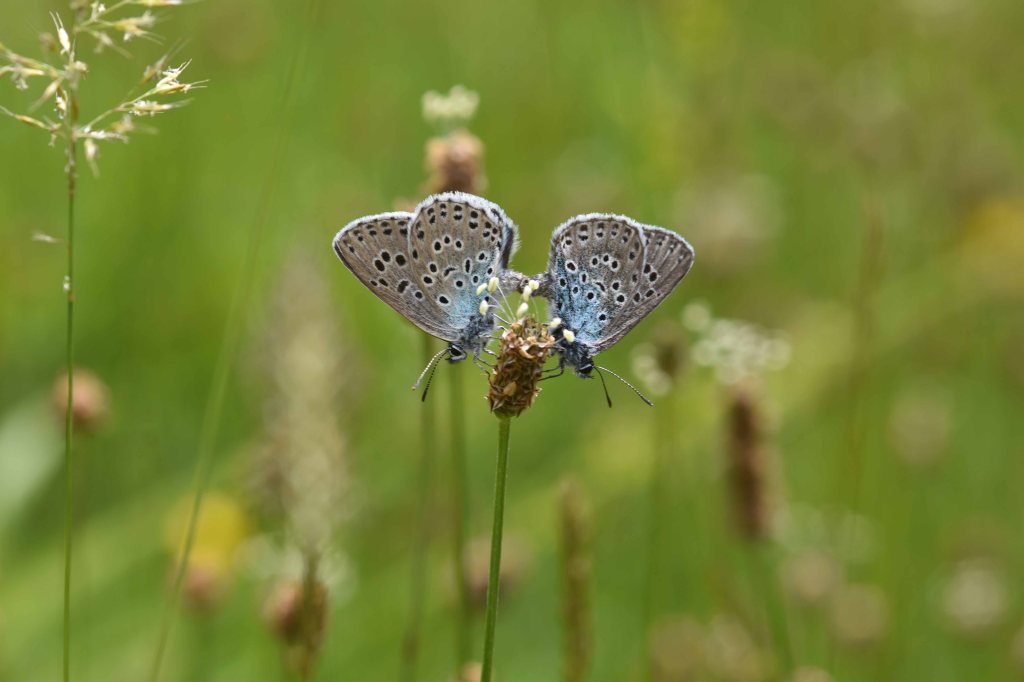
It has been a pleasure to spend so much time with the large blues and to have the opportunity to photograph them and really get to know the species. I have managed to photograph a lot of different stages of the season, including mating pairs, egg-laying females and the eggs themselves
Egg-laying female large blue
Mating pair of large blues
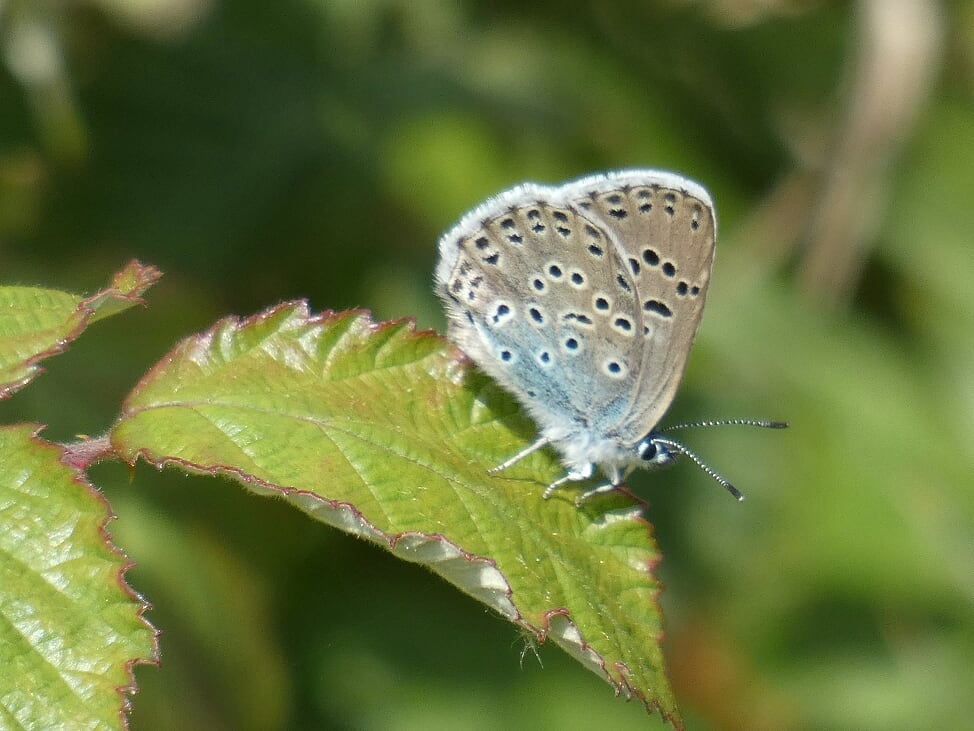
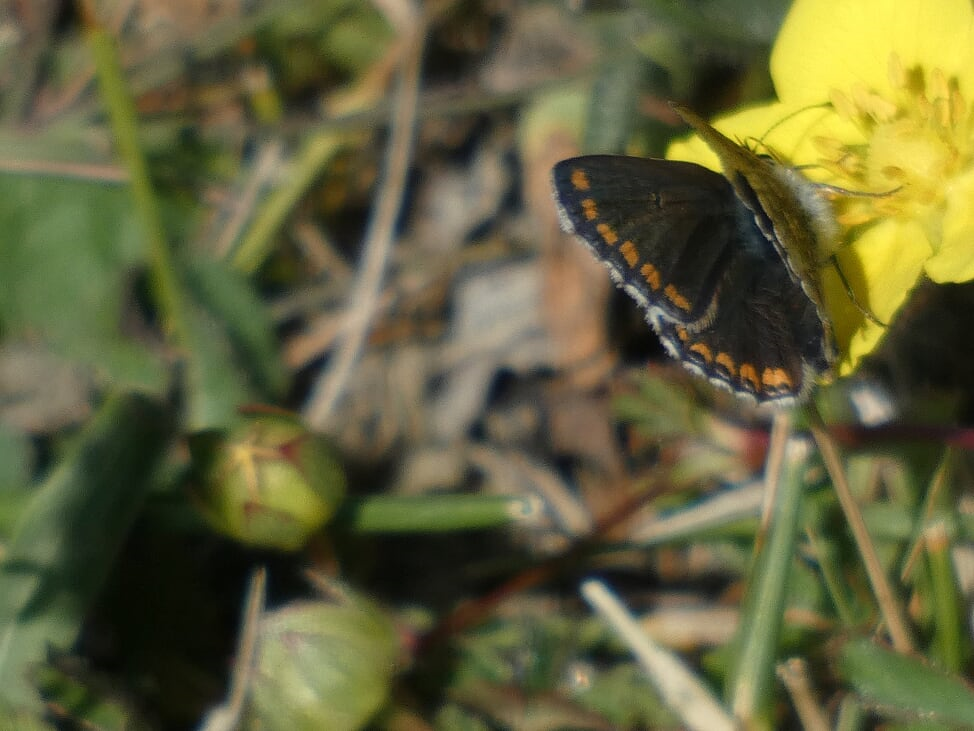
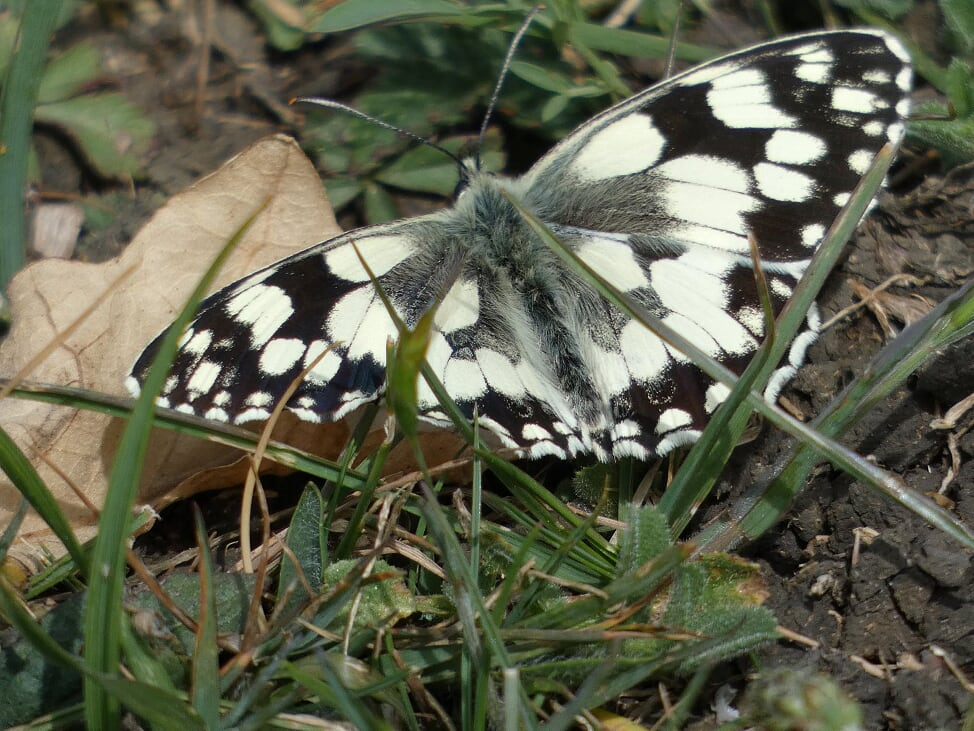
In total I have seen 21 species of butterfly (I’m hoping I haven’t forgotten any!) which are: – large blue – dark-green fritillary – comma – marbled white – meadow brown – small heath – ringlet – small skipper – large skipper – essex skipper – peacock – red admiral – painted lady – gatekeeper – common blue – brown argus – large white – small white – green-veined white – speckled wood – small tortoiseshell
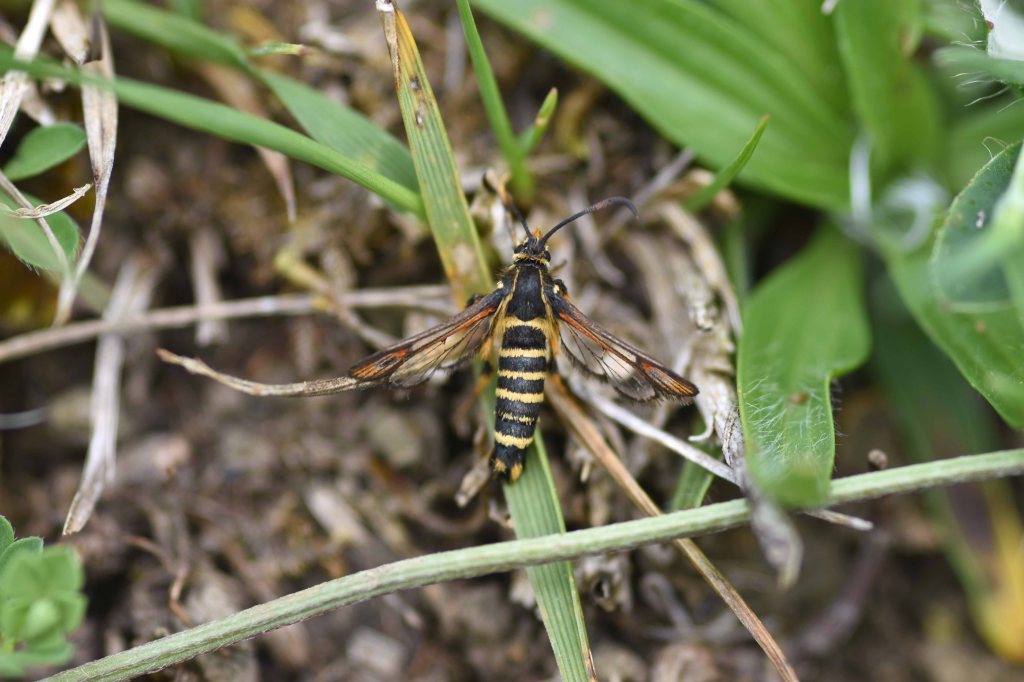
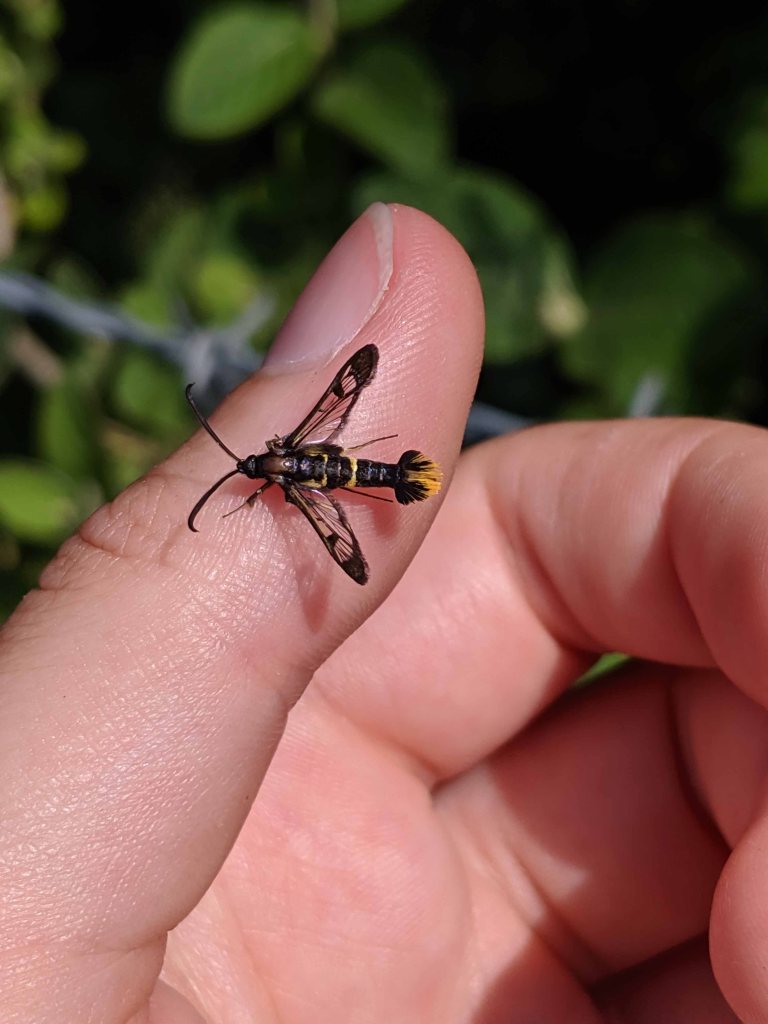
There has also been many new bees, beetles, moths and flies that I have seen as well, some of which are quite rare species which were really great to find, for example the moth Nemophora cupriacella and most excitingly the nationally rare Downland bee-fly, Villa cingulata. Having the opportunity to find some clearwing moths was really great as well as they are a really unusual and interesting family
Six-belted clearwing
Orange-tailed clearwing
It has been a real pleasure to spend so much time on Collard, I’ve learnt a lot and have had a great time chatting to all the visitors that make the pilgrimage to come and see the large blues. Writing the blog has been good fun too, it will be great to look back on and remind myself in the future of the great time I had up on the hill. I will have to come back next year to see how the butterflies are doing and what other treats Collard will treat us to. I hope next years ranger has an equally great time (maybe with slightly less rain!) and doesn’t mind me coming and visiting to see my favourite butterfly! My thanks go out to the National Trust team for their support, and Sarah and Dave for imparting some of their vast knowledge upon me! Thank you also for everyone who has engaged and commented with the blog, I hope it has been enjoyable and informative to read. Best of luck to next years ranger, I’m sure you’ll have a great time and make the most of spending time in such a wonderful place!
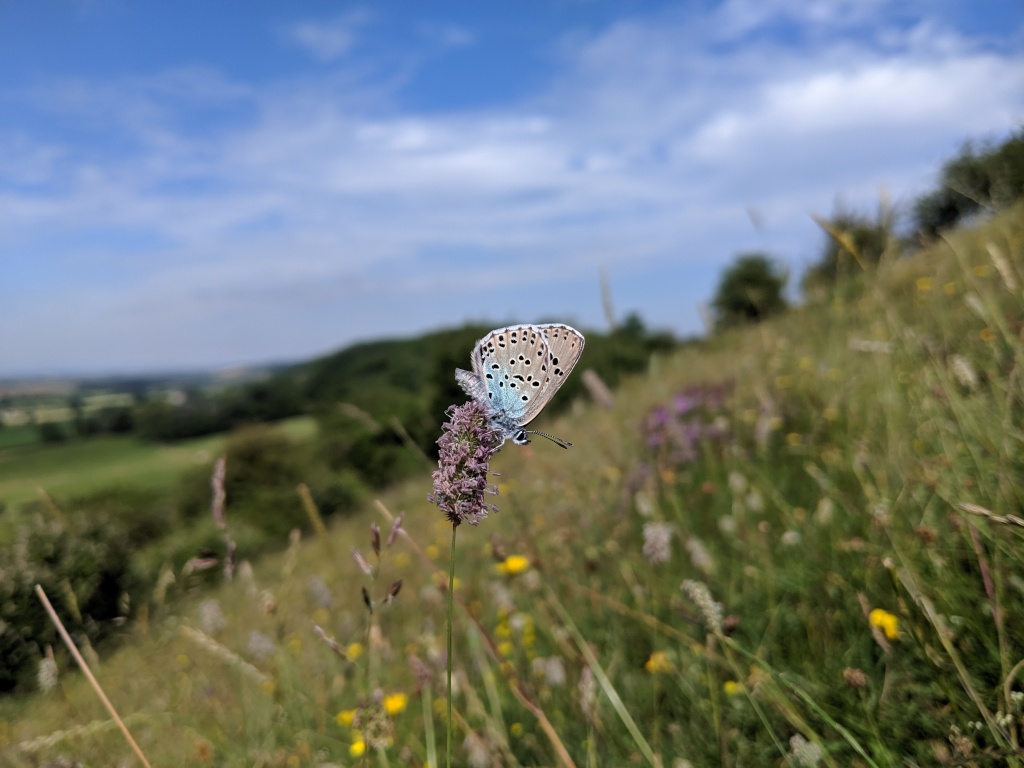
I’ll sign off with my favourite picture I’ve taken of the large blue in it’s beautiful home:
No large blues again today, which wasn’t unexpected! However, Collard keeps me busy with other creatures to find; the hill is a surprisingly good place for dragonflies and damselflies considering how far it is from any significant water body. I’ve had Emperor, Broad-bodied chaser, black-tailed skimmer, ruddy darter and brown hawker dragonflies and a lot of common blue damselflies. The brown hawker dragonfly was lovely to see today, it doesn’t seem to have very many records in Somerset, but may be another one of our Odonata species that is expanding its range.
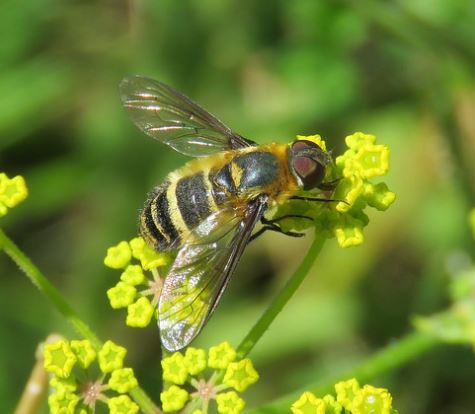
The best find of today however, goes to a member of the Diptera family. A very rare bee-fly landed right by my feet as I was enjoying the sun on the bench at the top of the hill; Villa cingulata, the Downland bee-fly! I only managed a couple of shoddy pictures with my phone, but hope to find it again tomorrow and take some better pictures.
From butterflies to moths, dragonflies, birds and flies, there’s plenty to see on Collard Hill on a sunny day! I have only two more days left now and hope to find some other interesting creatures to add to the list!
I had no large blues again today, suggesting their season is over and done with unfortunately; but their eggs are getting ready to hatch and caterpillars are munching away at the thyme preparing for next year when they’ll emerge and once more grace us with their presence!
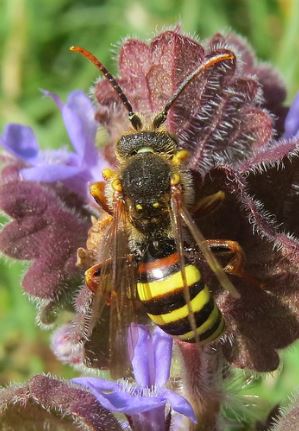
It wasn’t a great day for butterflies in general, it was cloudy and cool for most of the day with the sun only making an appearance later in the afternoon. I did have a few finds today though, including a variety of as yet unidentified Nomada bees, which are cleptoparasites of other bee species and often mistaken for wasps. They lay their eggs in the nests of other bees, mostly Andrena species, and can often be seen hovering around their nests looking for an opportunity to get in and lay their eggs.
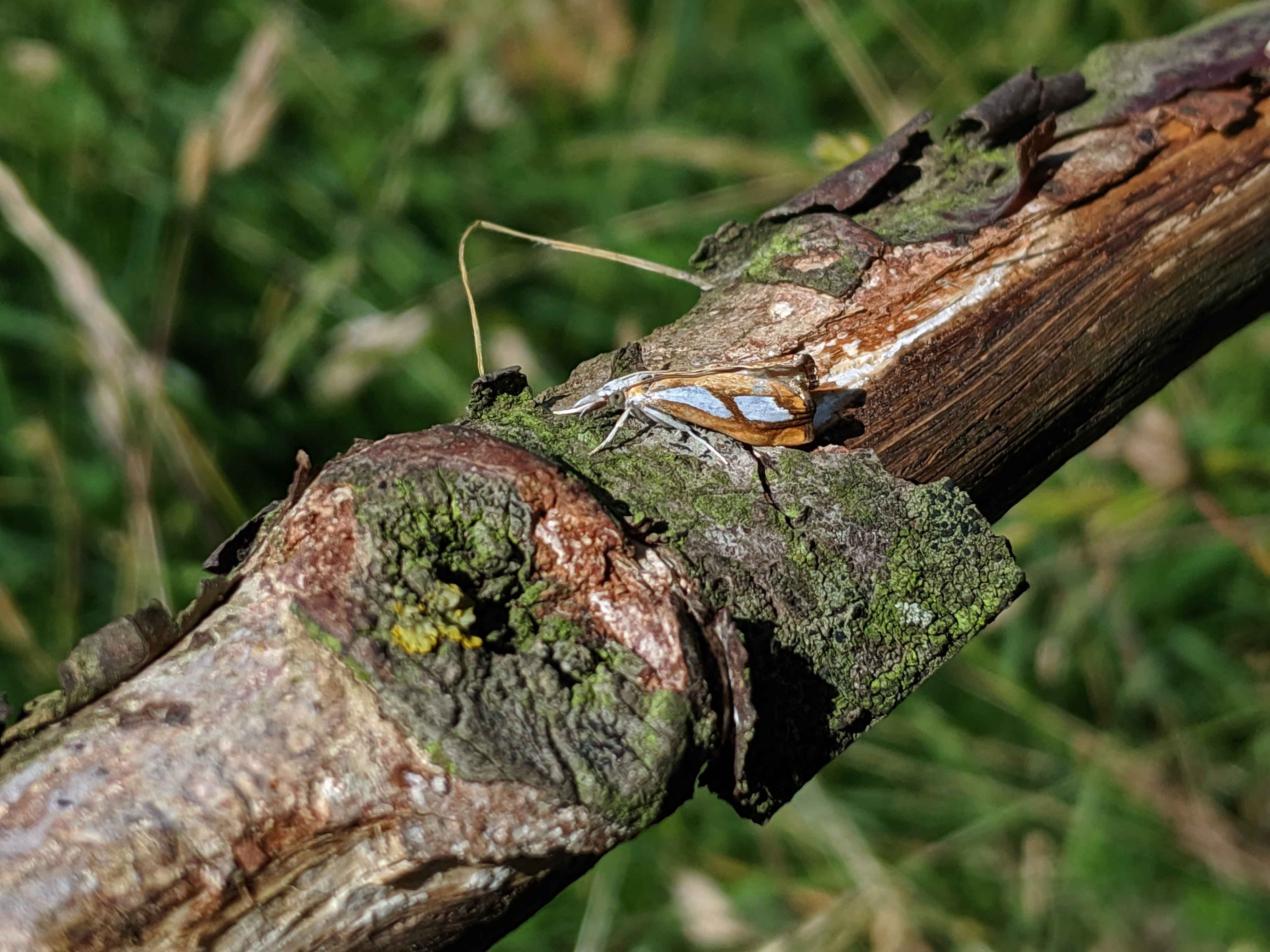
I also found this great looking micro moth Captoptria pinella which is an interesting species to find as it is usually found in boggy and marshy areas, so it must be a bit lost up on the exceedingly dry Collard Hill! But it blends in well despite it’s bright and shiny colouring.
I write about politics, nature + the environment. Some posts are serious, some not. These are my views, I don't do any promotional stuff and these views are not being expressed for anyone who employs me.


 The National Trust's Large Blue Blog